Vietnam arabica green coffee beans are a small, specific corner of the world’s second-largest coffee producer: about 1.1 to 1.2 million 60 kg bags a year against more than 30 million bags of robusta, grown mainly in Lam Dong province around Da Lat, with smaller areas in Son La, Dien Bien and Quang Tri. Most of it is Catimor, washed, screened to 16 or 18 and sold as a clean, mild, competitively priced arabica for blends, capsules and roast-and-ground.
This guide covers where the coffee grows, which varieties and processes you will find, how export grades are specified, what the cup tastes like by origin and process, and how to buy it.
Key Takeaways
- USDA forecasts Vietnamese arabica at 1.1 million bags for 2026/27, roughly 3% to 4% of national output.
- Lam Dong (Cau Dat, Da Lat, Lac Duong, Duc Trong, Lam Ha) at about 1,200 to 1,600 m is the volume and quality center; Son La, Dien Bien and Quang Tri are smaller, lower origins.
- Catimor dominates for rust resistance and yield; Bourbon, Typica and the local “Moka” are small specialty plantings.
- Export grades use screen and black and broken limits (G1 S18, G1 S16, G2), not altitude labels such as SHB; washed is the standard process.
Table of Contents
- What Are Vietnam Arabica Green Coffee Beans?
- Where Is Vietnam Arabica Grown? Four Origins Compared
- Varieties: Catimor, Bourbon, Typica and Moka
- Processing: Washed Is the Standard, Honey and Natural Are the Exception
- Export Grades: G1 S18, G1 S16 and G2 Explained
- Cup Profiles by Origin and Process
- How to Buy Vietnam Arabica Green Coffee Beans
- Frequently Asked Questions
- Next Steps
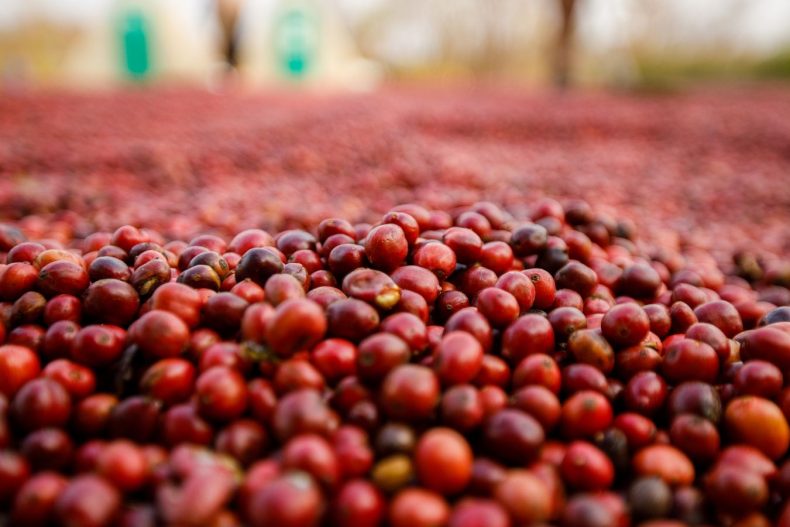
[IMAGE PLACEHOLDER — replace with a real photo, then delete this line] File: vietnam-arabica-green-coffee-beans-cau-dat-lam-dong.webp · ALT: Washed arabica parchment drying in a greenhouse in Cau Dat, Lam Dong, Vietnam · Brief: real Helena farm photo, raised beds or patio
What Are Vietnam Arabica Green Coffee Beans?
Vietnam arabica green coffee beans are unroasted Coffea arabica grown mostly above 1,000 m in Lam Dong and the northwest, harvested from roughly November to February, washed and dried to 12.5% moisture, and exported in 60 kg jute bags as Grade 1 (screen 18 or 16) or Grade 2. They are priced against the New York arabica market plus or minus a differential, just as robusta is priced against London.
Volumes are small but steady. The USDA Coffee Annual of June 2026 (via Daily Coffee News) estimates 1.2 million bags for 2025/26 and forecasts 1.1 million for 2026/27, against 31.4 million bags of robusta. That ratio sets the market position: Vietnamese arabica competes on clean cups, consistency and price, not on scarcity.
Where Is Vietnam Arabica Grown? Four Origins Compared
| Origin | Key areas | Altitude | Harvest | Typical processing |
|---|---|---|---|---|
| Lam Dong | Cau Dat, Da Lat, Lac Duong, Duc Trong, Lam Ha | About 1,200 to 1,600 m | November to February | Washed; honey and natural for specialty |
| Son La | Northwest highlands | Roughly 600 to 1,200 m | October to January | Washed |
| Dien Bien | Northwest, near the Lao border | Roughly 600 to 1,200 m | October to January | Washed |
| Quang Tri | Khe Sanh (Huong Hoa) | Roughly 400 to 700 m | October to December | Washed, some natural |
Lam Dong is where most Vietnam arabica green coffee beans come from and where the specialty segment lives. Cau Dat, about 24 km from Da Lat, sits above 1,500 m with cool nights and slow ripening; our Cau Dat lots are picked at 98% to 99% ripeness, and the area’s producers dry parchment in greenhouses or on raised beds, a practice Perfect Daily Grind documented in its 2018 report on Vietnam’s path to high-quality arabica. Duc Trong and Lam Ha, at 1,250 m and above, supply much of the washed Catimor volume.
Son La and Dien Bien in the northwest have a cooler, drier winter and produce clean washed Catimor, often blended with Lam Dong lots in standard grades. Quang Tri’s Khe Sanh area is lower and warmer, so its arabica is softer in acidity and suits blends. Unlike Central America, Vietnam does not grade by altitude; see our note on strictly hard bean labels and why they do not appear on Vietnamese contracts.
Varieties: Catimor, Bourbon, Typica and Moka
Catimor is the backbone. World Coffee Research lists T8667, a Timor Hybrid 832/1 x Caturra cross, as highly resistant to coffee leaf rust, high yielding and of average bean size, and notes that “Catimor” is really a group of related varieties. Vietnamese growers adopted it after coffee rust and low prices pushed out older plantings. Its cup is clean and mild, with cocoa, caramel and soft citrus; above 1,200 m with careful picking it is a dependable blend component rather than a floral showpiece.
Bourbon and Typica survive in small plots around Da Lat. Our yellow bourbon coffee beans vietnam lot comes from Son Duong above 1,550 m, with caramel, milk chocolate, ripe yellow fruit and a creamy body. Moka is the local name for an heirloom small-bean arabica grown in Cau Dat; our dictionary entry on Mocha, Mokka and Moka untangles the naming, and our specialty arabica moka coffee beans page describes its floral aroma, chocolate, caramel and ripe fruit. These lots are allocated after the harvest is cupped, so volumes are confirmed each season rather than promised in advance.
Processing: Washed Is the Standard, Honey and Natural Are the Exception
Most Vietnam arabica green coffee beans are washed: cherries are pulped on the day of harvest, fermented until the mucilage loosens, washed in clean water and dried as parchment to 12.5% moisture, then hulled and graded before export. The result is the bright, clean cup roasters expect from the origin and the most uniform green color for optical sorting.
Honey processing (parchment dried with part of its mucilage) and natural processing (whole cherries dried) are used on a small share of Lam Dong lots for buyers who want more sweetness and body. Both depend on dry weather and constant turning, so volumes are limited and sell early. Our comparison of washed vs honey arabica from Vietnam covers the trade-offs.
Export Grades: G1 S18, G1 S16 and G2 Explained
Vietnamese arabica is specified the same way as robusta: screen retention, moisture, black and broken beans and foreign matter, each as a percentage by mass. The table shows the values on three of our current pages.
| Parameter | Grade 1 S18 washed | Grade 1 S16/S18 fully washed | Grade 2 fully washed |
|---|---|---|---|
| Screen | 90% min above screen 18 | 90% on screen 16 and 18 | Screen 16 and 18, 90% on sieve |
| Black beans | 0.1% max | 0.1% max | 5% max |
| Broken beans | 1.0% max | 0.1% max | 2% max |
| Foreign matter | 0.1% max | 0.1% max | Ask for the lot value |
| Moisture | 12.5% max | 12.5% max | 12.5% max |
| Origin and altitude | Lam Dong, 1,200 m and above | Cau Dat, about 1,350 m | Lam Dong, 1,150 m and above |
| Typical use | Espresso blends, filter, capsules | Filter, espresso, capsules | Price-led blends, roast and ground |
Sources: our vietnam arabica washed coffee beans, wet processed arabica coffee vietnam and commercial arabica coffee grade 2 pages. Our single-variety arabica catimor fully washed grade 1 from Duc Trong and Lam Ha runs 0.2% max black, broken and foreign matter. Grade labels follow the Vietnamese coffee grading system.
Cup Profiles by Origin and Process
- Cau Dat washed (Grade 1): clean, bright acidity, balanced body, citrus, caramel and milk chocolate; light-to-medium roasts for filter, medium for espresso.
- Lam Dong washed S18: medium body, mild acidity, milk chocolate, nuts and a hint of citrus; built for espresso blends with Brazilian naturals or Vietnamese robusta.
- Catimor washed (Duc Trong, Lam Ha): citrus and red-apple acidity, caramel and cocoa, smooth finish.
- Honey (Lam Dong, Quang Tri, Son La blend): honey-like sweetness, fruity undertones, caramel and cocoa, soft rounded acidity; medium roasts, espresso and cold brew.
- Yellow Bourbon and Moka specialty lots: caramel, ripe fruit, floral notes and a long sweet finish; small volumes, light-to-medium roasts.
For our arabica s18 fully washed specialty lot, ask for the current harvest’s cupping notes; weather shifts the profile from year to year.
Want to cup Vietnamese arabica before you commit? Request free samples of our washed Grade 1 S18, Cau Dat washed and honey lots with a dated FOB or CIF quote. Our export team replies within 24 hours. Request a Free Sample
How to Buy Vietnam Arabica Green Coffee Beans
- Timing. New-crop washed lots ship from about December; stored parchment allows shipments through the year, but cup the current crop before buying late in the cycle. Specialty lots are allocated after the January and February cuppings.
- Samples and approval. Ask for a cupping sample of about 100 g per profile, then a sealed pre-shipment sample before the container is stuffed.
- Quantity. MOQ is from 1 MT; a 20 ft container holds 320 x 60 kg bags, 19.2 MT, and arabica can share a container with robusta lots.
- Terms. FOB Ho Chi Minh City (Cat Lai) is standard, CFR and CIF on request; prices are quoted against the New York arabica market and fixed by a signed PI; payment is typically 30% T/T deposit with 70% against copy of bill of lading, or L/C at sight; lead time is about two to four weeks.
- Packing and paperwork. 60 kg jute bags with GrainPro liners on request; commercial invoice, packing list, bill of lading, certificate of origin, ICO certificate, phytosanitary and fumigation certificates, and a certificate of analysis.
Where Vietnamese arabica is not the right fit: buyers who need Ethiopian or Panamanian florals, buyers who need certified lots (ask our team which certified lots are available for the current crop) and buyers who want very large single-estate volumes, which a smallholder origin does not provide. Browse the range in our arabica green coffee beans category, and see our guide to sourcing specialty arabica from Vietnam for the small-lot side.
Frequently Asked Questions
How much arabica does Vietnam produce?
The USDA Coffee Annual of June 2026 estimates about 1.2 million 60 kg bags for 2025/26 and forecasts 1.1 million for 2026/27, compared with roughly 31 million bags of robusta. Arabica is therefore around 3% to 4% of Vietnamese output, concentrated in Lam Dong with smaller volumes from Son La, Dien Bien and Quang Tri.
Is Vietnamese arabica good for espresso?
Yes, particularly washed Grade 1 lots from Lam Dong. Their medium body, mild acidity and chocolate and nut notes sit well with Brazilian naturals or Vietnamese robusta in an espresso blend, and screen 18 lots roast evenly to medium-dark. For single-origin espresso, honey and yellow bourbon lots bring more sweetness.
What is the difference between Vietnam arabica Grade 1 and Grade 2?
Grade 1 is screened to 16 or 18 with black and broken beans limited to about 0.1% to 1%; Grade 2 allows about 5% black and 2% broken beans at the same screens. Both are washed and dried to 12.5% moisture. Grade 1 suits espresso, filter and capsules; Grade 2 suits price-led blends where appearance matters less.
When is the Vietnam arabica harvest?
Lam Dong harvests from roughly November to February, with the northwest provinces starting a little earlier, around October. New-crop washed lots are usually available for shipment from December, and specialty allocations are confirmed after cupping in January and February.
Next Steps
Vietnam arabica green coffee beans are a value play with a specialty edge: clean washed Catimor at a competitive differential for blends and capsules, plus small Cau Dat, Bourbon and Moka lots for roasters who want a story. Decide which of the two you are buying, then ask for samples from the current crop.
Ready to source Vietnamese arabica? Send us your target grade, screen, volume and destination port. We will reply within 24 hours with available lots, a dated quote and free samples. Request a Quote or WhatsApp +84 789 818 828.