Two sachets sit side by side on a convenience-store shelf. One promises coffee, creamer and sugar in a single stir; the other leaves the sugar to the drinker. The 3 in 1 coffee mix and its 2-in-1 sibling share most of their ingredients and all of their manufacturing, yet they are formulated for different consumers and behave differently in the cup, on the filling line and over shelf life. This guide compares the two formats from a product developer’s perspective: how the coffee ratio sets perceived strength, how creamer chemistry builds mouthfeel, how sugar level and sachet weight interact, and how to decide which format, or which combination, fits a given market in 2026.
Definitions and Market Positioning
A 3-in-1 mix contains soluble coffee, creamer and sugar; one sachet plus hot water is a complete sweet, milky coffee. A 2-in-1 mix contains coffee and creamer only, so the consumer adds sugar to taste or drinks it unsweetened. The 3-in-1 dominates in volume because it removes every decision from the consumer and hits a broad sweet-creamy preference across Southeast Asia, the Middle East and Eastern Europe. The 2-in-1 targets health-aware drinkers, office and hospitality settings where sugar is served separately, and markets with sugar taxes or labelling rules. Many brands run both under one design, which is why the formulation decisions below are usually made together.
Formulation Basics for a 3-in-1 Coffee Mix
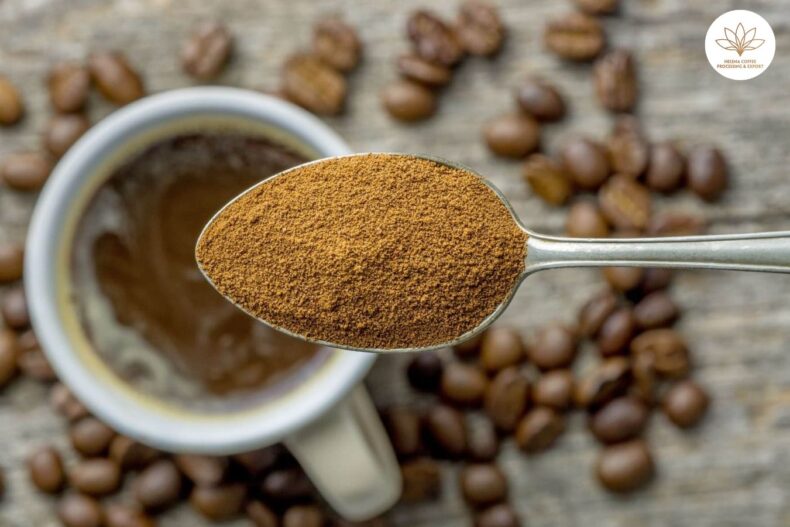
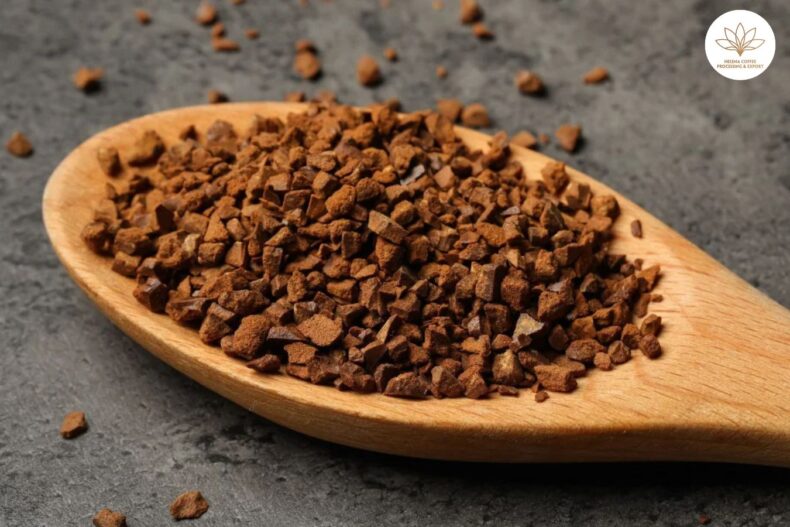
The 3-in-1 recipe is built backwards from the cup. Start with a target cup volume, usually 150–200 ml, and a target sweetness, then size the sachet, typically 16–20 g. Coffee occupies roughly 8–12% of the sachet, creamer 25–40% and sugar most of the rest, with up to a few percent of minor ingredients such as anti-caking agents, salt or flavour. The coffee is nearly always a Robusta-based powder, such as a Robusta spray-dried instant or its agglomerated form, because its strength survives dilution. Sugar doubles as the free-flowing carrier that keeps the finer coffee and creamer particles evenly distributed through the blend.
Formulation Basics for a 2-in-1 Mix
Remove the sugar and the recipe loses roughly half its mass, so a 2-in-1 sachet is smaller, often 10–14 g, or the creamer share rises to fill the volume. Coffee commonly climbs to 15–25% of the sachet and creamer to 70–85%, which changes the balance of the drink: without sugar to round the edges, the coffee’s bitterness and the creamer’s fat are both more exposed. Formulators usually respond with a slightly less bitter base, sometimes a Robusta-Arabica blend such as a spray-dried Robusta and Arabica, a creamer with higher fat and protein for a smoother profile, and a small salt addition to soften bitterness. Flow is also harder because sugar’s carrier function is gone; particle size matching becomes critical.
Coffee Ratio and Perceived Strength
Consumers judge strength by bitterness, colour and body, not by caffeine. In a 3-in-1, 1.5–2.5 g of coffee per cup is masked by sweetness and fat, so manufacturers lean on dark-roasted, full-bodied Robusta to register at all. Raising coffee from 8% to 12% of the sachet noticeably shifts perception toward “real coffee” at a small cost increase. In a 2-in-1, the same gram weight reads far stronger because nothing sweet competes, so brands often hold coffee content similar in grams but choose a smoother base. Caffeine per sachet typically lands in the range a consumer expects from a mild cup, with Robusta-based mixes at the higher end. Colour of the finished drink, driven by creamer whiteness against coffee darkness, is worth matching to the market’s visual expectation.
Creamer Chemistry: Fat, Protein and Mouthfeel
Creamer does the heavy lifting in both formats. Spray-dried non-dairy creamer is an emulsion of vegetable fat in a glucose syrup matrix stabilised by caseinate or other proteins and emulsifiers. Fat content, often 25–35% of the creamer, controls richness and the creamy coating in the mouth; higher fat improves 2-in-1 mixes where sugar is not adding body. Protein type and quantity govern whitening power and resistance to feathering in hot water, while emulsifiers determine how quickly the powder wets. Dairy creamers based on milk powder taste milkier but are more expensive and less stable in heat and humidity. Plant-based creamers from oat or coconut are growing in both formats, with weaker whitening and different foam. Always test the creamer in the actual coffee base rather than on its own.
Sugar Levels and Regional Taste
Sugar in a 3-in-1 ranges roughly from 45% to 60% of the sachet, which translates to around 8–12 g per cup. Southeast Asian recipes typically sit at the upper end, Eastern European and Middle Eastern recipes somewhat lower with a stronger coffee note, and newer “less sugar” lines cut sugar by a quarter to a third while adding high-intensity sweeteners and bulking agents. Sugar type matters too: fine granulated sugar flows and dissolves well, while very fine or powdered sugar cakes faster. Brands entering a new market should benchmark the leading local sachet for sweetness before fixing the recipe, because a product that is too sweet or not sweet enough for local habit rarely gets a second purchase.
Sachet Weight and Cup Volume
Sachet weight, cup volume and recipe are one decision, not three. A 20 g 3-in-1 sachet in 180 ml of water gives a rich cup; the same sachet in 250 ml tastes thin. Instructions on the pack should match the formulation and the typical cup size in the market; mugs are larger in some regions than others. For 2-in-1 mixes, a 12 g sachet in 150 ml is common. Fill accuracy on the line matters for both cost and consistency: a sachet that varies by a gram changes sweetness noticeably. Density of the blend, influenced by the coffee format and creamer, determines whether a given weight physically fits the sachet film size, so confirm bulk density before ordering film.
Comparison Table
| Parameter | 3-in-1 mix | 2-in-1 mix |
|---|---|---|
| Ingredients | Coffee, creamer, sugar | Coffee, creamer |
| Typical sachet weight | 16–20 g | 10–14 g |
| Coffee share | 8–12% | 15–25% |
| Creamer share | 25–40% | 70–85% |
| Sugar share | 45–60% | None |
| Preferred coffee base | Dark Robusta, spray-dried or agglomerated | Smoother Robusta or Robusta-Arabica |
| Flow and blending | Easier; sugar acts as carrier | Harder; needs matched particle sizes |
| Typical shelf life | 18–24 months | 18–24 months |
| Main consumer | Mass market, sweet preference | Health-aware, office, hospitality |
Variants: White Coffee, Iced, Sugar-Free
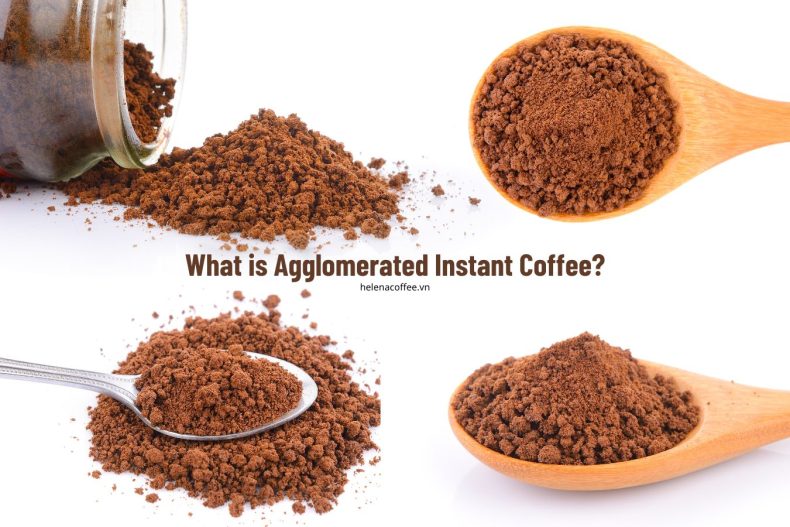
Beyond the two base formats, several variants use the same production platform. White coffee styles raise creamer and often use a lighter-roasted coffee base for a pale, very creamy cup. Iced coffee mixes are formulated to dissolve in cold water, which favours agglomerated coffee and creamers with fast-wetting emulsifiers, as explained in what is agglomerated instant coffee. Sugar-free 3-in-1 replaces sugar with sweeteners and bulking agents while keeping the full-cup convenience. Flavoured lines add hazelnut, vanilla, mocha or regional flavours. Each variant needs its own stability test because changing the carrier changes caking and oxidation behaviour.
Stability, Caking and Shelf Life
Both formats are typically given 18–24 months, shorter than pure instant coffee because creamer fat can oxidise and the blend is hygroscopic. The 3-in-1 is more vulnerable to caking because sugar draws moisture; the 2-in-1 is more exposed to fat oxidation because creamer dominates. Controls are the same: low-moisture ingredients, humidity-controlled blending rooms, barrier film with an aluminium or metallised layer, strong seals and storage below 25 °C. Accelerated tests at elevated temperature and humidity predict problems before launch, and retained samples confirm them in real time. Anti-caking agents help at the margin but cannot rescue a poor film or a leaking seal.
Choosing Between the Two for Your Market
- Check regulation and taxes: sugar levies and front-of-pack warnings favour 2-in-1 or reduced-sugar 3-in-1.
- Benchmark local sweetness: taste the top-selling sachets before deciding sugar level.
- Consider the channel: convenience retail leans 3-in-1; offices, hotels and health retail lean 2-in-1.
- Plan the range: many brands launch a 3-in-1 flagship and a 2-in-1 or less-sugar companion under one design.
- Cost the sachet: 2-in-1 uses less mass but more creamer per gram, so compare delivered cost per cup, not per kilogram.
Manufacturing requirements for either format are covered in our 3-in-1 coffee OEM guide, and the instant coffee category lists suitable coffee bases.
Frequently Asked Questions
What is the difference between a 2-in-1 and a 3-in-1 coffee mix?
A 3-in-1 contains instant coffee, creamer and sugar, giving a complete sweet, milky drink from one sachet. A 2-in-1 contains coffee and creamer only, leaving sweetness to the consumer. The 2-in-1 sachet is smaller, carries a higher coffee and creamer share and suits sugar-aware consumers and settings.
How much sugar is in a typical 3 in 1 coffee mix?
Usually 45–60% of the sachet, or roughly 8–12 g per cup for a 16–20 g sachet. Recipes vary by region, with Southeast Asian products often at the higher end. Reduced-sugar versions cut this by a quarter to a third using high-intensity sweeteners and bulking agents to maintain volume.
Why is blending a 2-in-1 harder than a 3-in-1?
Sugar in a 3-in-1 acts as a free-flowing carrier that keeps finer coffee and creamer particles evenly distributed. Without it, the 2-in-1 relies on matching particle sizes and densities between coffee and creamer, and may need agglomeration or anti-caking agents to prevent segregation and clumping on the filling line.
Can the same coffee base be used for both formats?
Often, but not always ideally. A dark, full-bodied Robusta that cuts through sugar in a 3-in-1 can taste harsh in an unsweetened 2-in-1, so formulators may choose a smoother Robusta or a Robusta-Arabica blend for the 2-in-1. Testing both recipes with the same base saves cost if it works.
Which format has the longer shelf life?
Both are typically given 18–24 months in intact barrier film. The 3-in-1 is more prone to caking because sugar is hygroscopic, while the 2-in-1 is more exposed to creamer fat oxidation. Good film, strong seals, low-moisture ingredients and storage below 25 °C matter more than the format itself.
Work With Helena Coffee Vietnam
Helena Coffee Vietnam has exported green coffee, instant coffee and OEM/private-label products to 55+ countries since 2016. Free samples, response within 24 hours.
Email: director@helenacoffee.vn · WhatsApp/Zalo: +84 837 889698 · Browse our products