The 3-in-1 sachet is the most widely consumed coffee format across Southeast Asia, the Middle East, Eastern Europe and much of Africa, and most brands that sell it do not make it. They work with a 3 in 1 coffee manufacturer who blends instant coffee, creamer and sugar to a recipe, fills it into single-serve sachets and ships finished cartons. The format looks simple but hides real formulation and engineering decisions: which coffee base, which creamer system, how much sugar, how to keep the powder free-flowing in a humid climate and how to pack it so it survives two years on a shelf. This guide covers all of it from a brand owner’s perspective.
What a 3-in-1 Coffee Mix Is
A 3-in-1 mix is a dry blend of soluble coffee, a creamer and a sweetener, portioned so that one sachet plus hot water makes one cup. Sachets usually weigh 16–20 g, with coffee at around 8–12% of the mix, creamer roughly 25–40% and sugar making up most of the remainder. Variants include 2-in-1 (coffee and creamer, no sugar), white coffee styles with higher creamer, and sugar-reduced versions using high-intensity sweeteners. The appeal is consistency and convenience: the consumer gets the same sweet, creamy cup every time without a kettle of milk or a sugar bowl. For brands, it is a high-volume, low-ticket product where cost per sachet and reliable dissolution decide success.
Ingredients: Coffee, Creamer, Sugar
Three ingredient families carry the product. The coffee is almost always Robusta-based instant, either spray-dried or agglomerated, chosen for strength under sugar and creamer and for price. The creamer is a spray-dried powder built on vegetable fat, a carbohydrate carrier such as glucose syrup solids, milk protein or caseinate, emulsifiers and stabilisers; it supplies whiteness, body and mouthfeel. The sweetener is usually refined sugar, sometimes partly replaced by high-intensity sweeteners or bulking agents in reduced-sugar lines. Minor ingredients include anti-caking agents, salt, flavourings and sometimes cocoa or milk powder. Each ingredient has its own moisture, particle size and flow behaviour, which is where the engineering begins.
Typical Formulation Ranges
| Component | Typical share of sachet | Function |
|---|---|---|
| Instant coffee | 8–12% | Flavour, caffeine, colour |
| Non-dairy creamer | 25–40% | Body, whiteness, mouthfeel |
| Sugar | 45–60% | Sweetness, bulk |
| Minor ingredients | 0–3% | Anti-caking, flavour, salt |
| Sachet net weight | 16–20 g | One cup of 150–200 ml |
Markets differ: Southeast Asian recipes tend toward higher sugar and creamer, while Eastern European and Middle Eastern buyers often ask for a stronger coffee note at the top of the range. Formulation choices are compared in 2-in-1 vs 3-in-1 coffee mixes.
Choosing the Coffee Base
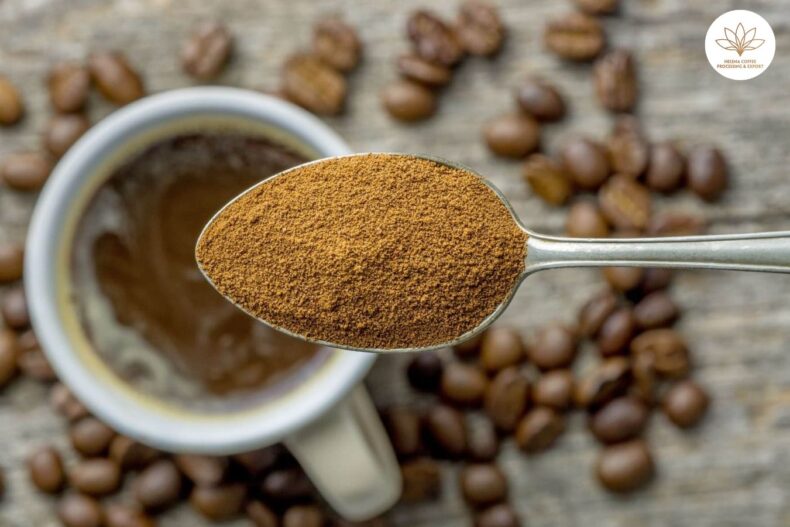
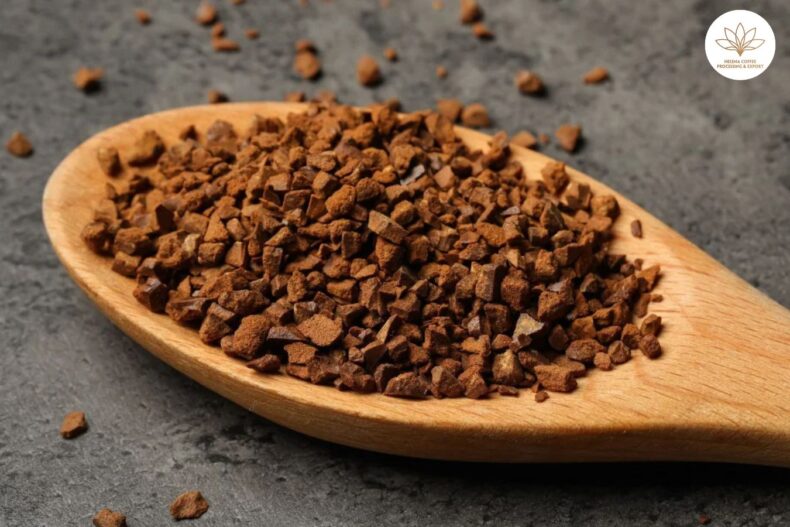
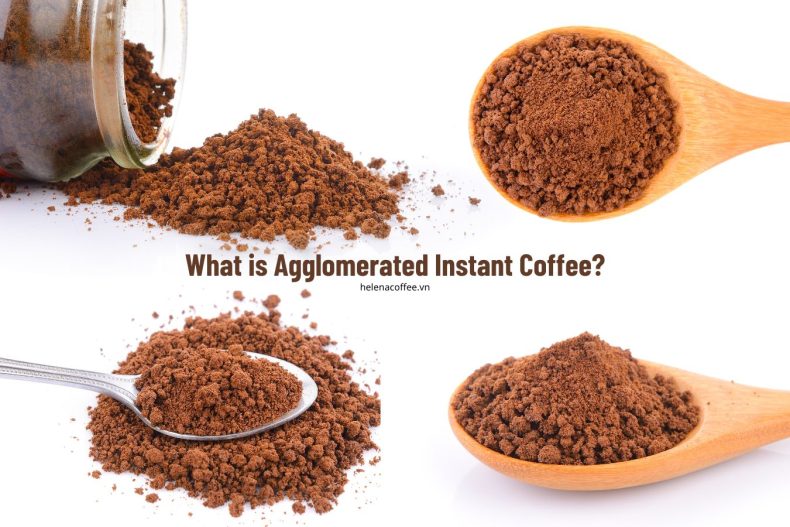
Because coffee is only around a tenth of the sachet, its flavour has to cut through a lot of sugar and fat. Robusta’s body, bitterness and caffeine do that; Arabica’s acidity and florals mostly disappear. Manufacturers typically use a Robusta spray-dried instant powder for cost-driven lines and an agglomerated version for lines where even dissolution and a visible coffee grain matter. The commercial SDC Robusta grade is a common workhorse for high-volume sachets. Roast level and extraction yield of the base are worth discussing with the manufacturer: a slightly darker, moderate-yield powder usually gives a cleaner cup than a very high-yield one, for a small cost difference per sachet.
Creamer Options: Dairy, Non-Dairy, Plant-Based
Non-dairy creamer built on hydrogenated or non-hydrogenated vegetable fat and glucose syrup solids remains the industry standard for stability, cost and whitening power. Fat level, typically in the range of 25–35% of the creamer, governs richness; protein source and emulsifier system govern how the drink looks and whether it feathers in hot water. Dairy-based creamers using skimmed milk powder give a more milky taste but cost more and are more sensitive to heat and moisture. Plant-based creamers from oat, coconut or soy serve vegan and allergen-aware segments, with trade-offs in whiteness and foam. Specify the creamer by fat content, protein type and allergen status, and test it in your actual coffee base before approval.
Sweeteners and Sugar-Reduced Versions
Refined white sugar does three jobs in a 3-in-1 mix: sweetness, bulk and a free-flowing carrier for the finer coffee and creamer particles. Removing it is harder than it looks. Reduced-sugar lines replace part of the sugar with high-intensity sweeteners such as sucralose or stevia extracts and restore bulk with maltodextrin, polydextrose or fibres, which changes mouthfeel and sometimes flow. Many markets now carry front-of-pack sugar labelling or taxes, so a “less sugar” variant is increasingly part of a brand’s range. Agree the sweetener system with the manufacturer early, confirm its regulatory status in each destination market and run a shelf-life test, because sweetener blends can behave differently in humidity.
Blending and Mixing Equipment
Dry blending looks trivial but decides whether every sachet tastes the same. Ingredients of different densities and particle sizes segregate when conveyed or vibrated; the fine, dense sugar sinks while light coffee granules rise. Manufacturers counter this with ribbon or paddle blenders run for validated times, matched particle sizes across ingredients and, in premium lines, binder agglomeration that glues coffee, creamer and sugar into a single composite granule. Humidity control in the mixing room is essential because sugar and coffee both absorb moisture and cake. A manufacturer should be able to show mixing validation data and in-line checks of sachet weight and coffee content, not just a clean blender.
Sachet Filling and Packaging Formats
Most 3-in-1 products are filled on vertical form-fill-seal or stick-pack machines into laminated film with an aluminium or metallised barrier layer, which protects against moisture, oxygen and light. Common formats are the flat pillow sachet, the slim stick and the larger family pouch. Sachets are collated into bags or boxes of 10–30 units, then cartons for shipping. Fill accuracy matters for cost and compliance; auger fillers with checkweighers are standard. Film specification should state the barrier structure, seal strength and print method. The wider range of options, including jars and bulk bags for food service, is covered in instant coffee packaging.
Shelf Life and Stability Issues
A well-packed 3-in-1 mix is typically given 18–24 months, sometimes longer, shorter than pure instant coffee because creamer fat can oxidise and sugar is hygroscopic. The main failure modes are caking from moisture ingress, off-flavours from fat oxidation, loss of coffee aroma and colour changes in the creamer. Accelerated shelf-life testing at elevated temperature and humidity is standard before launch, followed by real-time monitoring of retained samples. Storage below 25 °C at moderate humidity, intact barrier film and good seal integrity are the controllable factors. Ask the manufacturer for stability data on the exact recipe and film you will use, not a generic statement.
Regulatory and Labelling Considerations
Because a 3-in-1 mix is a compound food, labelling is more demanding than for pure coffee. Expect to declare the full ingredient list in descending order, allergens such as milk protein or soy, additives by function and name or number, a nutrition panel, net weight per sachet and per pack, preparation instructions, lot code and best-before date, and the responsible company’s address. Some markets regulate the minimum coffee content needed to call the product “coffee mix” and restrict certain sweeteners. Halal certification is expected in many Muslim-majority markets and vegan claims need substantiation. Confirm all of this with a local regulatory adviser before artwork is printed.
MOQ, Lead Time and Cost Structure
Minimums are usually expressed in sachets or cartons rather than kilograms, and the binding constraint is often the printed film run rather than the blend. A first order of several hundred thousand sachets is common for custom packaging; standard recipes in stock film may start lower. Lead times run from a few weeks for repeats to two or three months for a first order including film procurement. Cost per sachet is dominated by ingredients, with sugar and creamer prices mattering as much as coffee, followed by film, filling and cartoning. The coffee component moves with the Robusta market, so quotations often carry short validity. Compare total cost per finished sachet delivered, not cost per kilogram of mix.
How to Evaluate a 3-in-1 Manufacturer
- Documented food safety system and allergen management, with willingness to be audited.
- Formulation capability: in-house creamer and sweetener expertise, not just a blender.
- Mixing validation and in-line weight control data.
- Barrier film options and stability data for your recipe.
- Transparent sourcing of the coffee base, ideally with its own soluble production or direct access to Vietnamese Robusta powder.
- Realistic MOQ, lead time and a clear price-adjustment mechanism tied to ingredient markets.
- Export experience with the documents your market requires.
The broader steps of a private-label launch are set out in instant coffee OEM: how to launch your private label.
Frequently Asked Questions
How much coffee is in a 3-in-1 sachet?
Typically 8–12% of a 16–20 g sachet, which is roughly 1.5–2.5 g of instant coffee per cup. The rest is creamer and sugar. Brands wanting a stronger coffee note can push the coffee share higher or use a more concentrated Robusta base, at a modest increase in cost per sachet.
Why is Robusta used instead of Arabica in 3-in-1 mixes?
Because the coffee has to be tasted through a large amount of sugar and fat. Robusta’s body, bitterness and higher caffeine survive that dilution, whereas Arabica’s acidity and floral notes largely disappear. Robusta is also cheaper and yields more soluble solids, which matters in a cost-sensitive format.
What shelf life can a 3-in-1 product have?
Usually 18–24 months in intact barrier film stored below 25 °C, with some recipes validated longer. Creamer fat oxidation and moisture-driven caking are the limiting factors. Request accelerated and real-time stability data on your specific recipe and packaging rather than relying on a general figure.
What is a typical minimum order for custom 3-in-1 sachets?
Often several hundred thousand sachets for a first order with custom printed film, because the film run sets the minimum. Standard recipes in generic or stock film may be available in smaller quantities for trials. Agreeing a twelve-month volume usually improves pricing and scheduling priority.
Can a manufacturer make a sugar-free or plant-based version?
Yes. Sugar-free versions use high-intensity sweeteners with bulking agents, and plant-based versions use oat, coconut or soy creamers. Both change mouthfeel, flow and stability, so they need separate development and shelf-life testing. Confirm that the sweeteners and ingredients are permitted in every market you plan to sell in.
Work With Helena Coffee Vietnam
Helena Coffee Vietnam has exported green coffee, instant coffee and OEM/private-label products to 55+ countries since 2016. Free samples, response within 24 hours.
Email: director@helenacoffee.vn · WhatsApp/Zalo: +84 837 889698 · Browse our products