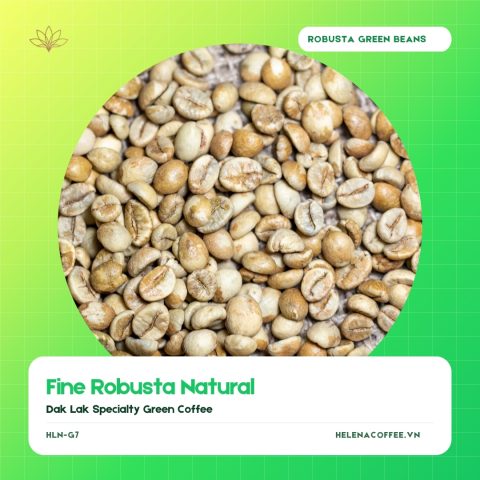
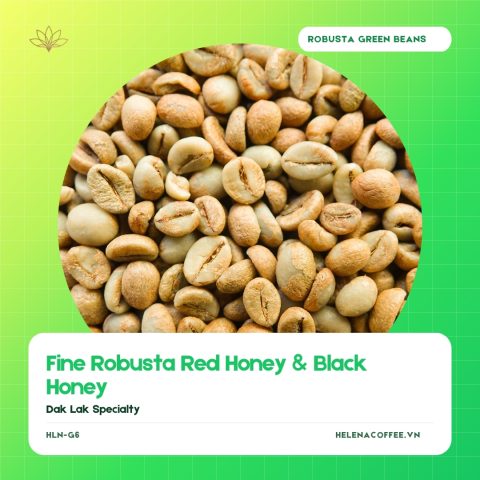
Robusta coffee grade 1 screen 18 from our own mill in Dak Lak: natural, sun-dried robusta graded to 90% min above screen 18 with 2% max black & broken. It is the reference commercial grade for Vietnamese robusta and a cost-effective base for espresso blends, dark roasts and soluble coffee.
Moisture 12.5% max · foreign matter 0.1% max
Gravity and color sorted, moisture checked before stuffing
60 kg jute bags or 1,000 kg jumbo bags · 19.2 MT per 20 ft
FOB Ho Chi Minh City (Cat Lai) · CFR/CIF on request
Dear Helena Coffee Vietnam,
Thanks to your company and the excellent service and coffee beans provided by your delightful employees. All our customers enjoyed your coffee beans with Honey Processing and Fully Washed. I would love to recommend your company to anyone who needs a coffee supplier in the future.
Sincerely!
Donald Packer@DonaldPacker99
Hi Helena Coffee,
I want you to know how much I appreciate the excellent service and green coffee beans you provided on the last shipment. Your attention to detail, great communication skills, and ready smile made the experience even better than I expected. I won't hesitate to bring future clients to your establishment. If I can put in a good word for you with the Import and Export manager, don't hesitate to ask.
Your happy customer!
Elizabeth Turner@ElizabethTurner
I wanted to drop you a note and thank you for the wonderful, amazing service and coffee you provided during my business time. Next time I go back to your office, I hope to have a couple of my closest partners with me.
Relaxed and happy!
Coffee Beans Product Information
Robusta coffee grade 1 screen 18 with 2% black & broken is the reference commercial grade for Vietnamese robusta. Most commercial roasters and traders use it to compare offers from Vietnam, and it is the lot most often requested on international tenders. We buy it from Dak Lak growers, dry-mill it at our own mill in Buon Ma Thuot and load it at Cat Lai port.
Choose it when price per kilo drives the decision: espresso and dark-roast blends, Turkish and phin coffee, and soluble production. If your customers see the whole bean, one of the cleaner lots under Related Products will serve you better.
Specifications
Parameter
Specification
Origin
Dak Lak (Buon Ma Thuot), Vietnam
Species
Robusta (Coffea canephora)
Grade
Grade 1, commercial
Screen size
90% min above screen 18 (18/64 inch, about 7.1 mm)
Black & broken
2% max
Foreign matter
0.1% max
Moisture
12.5% max
Processing
Natural (sun-dried), machine cleaned, gravity and color sorted
Packing
60 kg jute bags; 1,000 kg jumbo bags or GrainPro liners on request
Container load
20 ft: 320 bags = 19.2 MT; 40 ft: about 26–27 MT
Port of loading
Ho Chi Minh City (Cat Lai)
What Does Robusta Coffee Grade 1 Screen 18 Mean?
Screen 18 means at least 90% of the beans stay on a sieve with round holes of 18/64 inch, about 7.1 mm. Black & broken (B&B) is the share of fully or partly black beans plus broken fragments, capped here at 2% of the sample. In short, the screen describes size and the grade describes defects.
Sieves are numbered in steps of 1/64 inch, so screen 16 is about 6.3 mm; larger, even beans roast more uniformly and carry a premium. A 2% B&B limit is a commercial tolerance: black beans add harsh notes and broken pieces can scorch, but the effect is small in dark roasts, blends and extraction. Our guide to the Vietnamese coffee grading system shows how grade and screen combine on a contract.
Cup Profile & Applications
Expect a classic strong Vietnamese robusta: full body, low acidity, bitter-chocolate and woody notes, a long finish and thick crema.
Espresso and dark-roast blends: body and crema at a lower cost per kilo.
Turkish and Vietnamese phin coffee: a heavy cup that stands up to sugar and condensed milk.
Roast-and-ground blends where price per kilo matters.
Soluble coffee: widely used as raw material for instant production.
Not the best fit: light roasts or whole-bean retail where shoppers judge bean appearance.
Processing & Quality Control
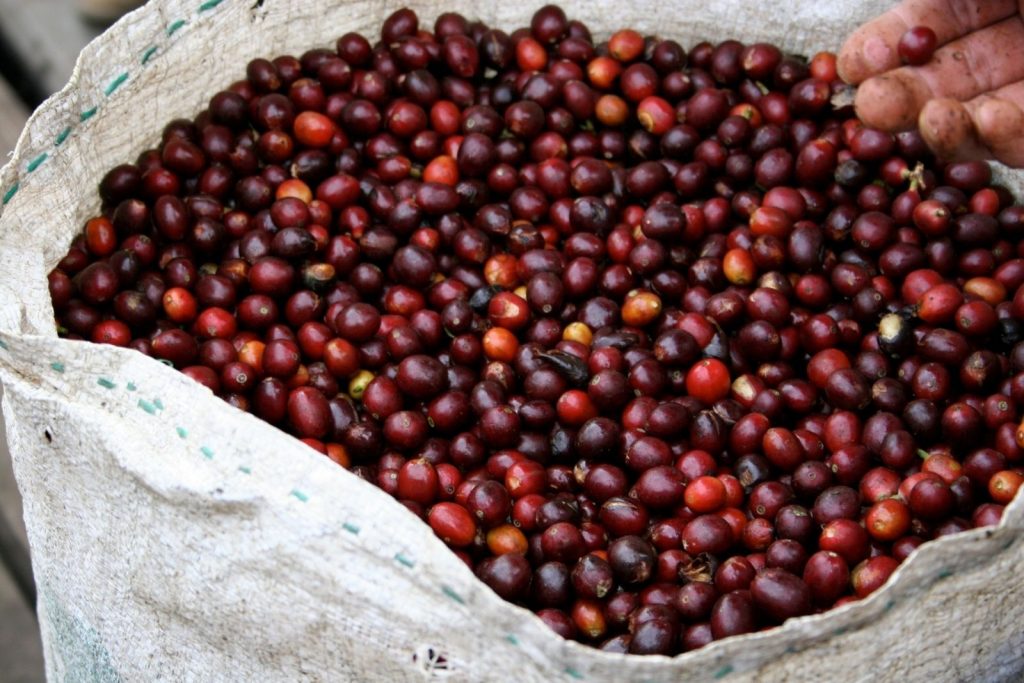
Our robusta coffee grade 1 screen 18 is natural (dry) processed: cherries are sun-dried whole, then hulled. At our Dak Lak mill, which handles 100 tons a day, the beans are machine cleaned, graded on screens, gravity-sorted and optical color sorted to pull black and discolored beans. Moisture is checked against the 12.5% limit before the container is stuffed.
We can send a pre-shipment sample (PSS) from the lot, and SGS, Cotecna, Cafecontrol or Vinacontrol inspection can be arranged on request. Our facility is certified to ISO 22000:2018 for food safety management.
Packing, Shipping & Ordering
MOQ: from 1 MT; the standard shipment is one 20 ft container (320 × 60 kg jute bags = 19.2 MT). A 40 ft takes about 26–27 MT, subject to weight limits.
Price and Incoterms: set against the London (ICE) robusta market plus or minus a differential, fixed by a signed PI; FOB Ho Chi Minh City (Cat Lai), CFR or CIF on request.
Lead time: about 2–4 weeks from PI, depending on season and queue.
Payment: 30% T/T deposit and 70% against copy of B/L, or irrevocable L/C at sight.
Documents: commercial invoice, packing list, bill of lading, certificate of origin, ICO certificate of origin, phytosanitary and fumigation certificates, certificate of analysis.
How does this lot differ from the 0.5% BB screen 16 lot?
This lot allows up to 2% black and broken beans and is priced accordingly; the screen 16 lot is cleaned to 0.5% B&B. Choose robusta coffee grade 1 screen 18 for blends and soluble coffee where price is the priority, and the cleaner lot where visual quality matters.
Do you ship grade 1 screen 18 in bulk?
Yes. Besides 60 kg jute bags we can load 1,000 kg jumbo bags, which cuts handling costs at instant coffee plants and large roasteries. Share your destination port and our team will confirm the load plan.
Can you supply this grade all year?
Yes. We ship robusta every month, backed by more than 10,000 tons of annual robusta export capacity. For regular programs, a monthly or quarterly supply contract helps us plan volume for you.
Can I get a sample before ordering?
Yes. Qualified buyers receive a free cupping sample of about 100 g, sent on your DHL or FedEx account or quoted in advance. Approve it, and the pre-shipment sample confirms the lot before loading.
Certifications
Exploring Vietnam Robusta: Bold Flavor Profile and Unique Taste
Vietnam shines as the top global exporter of robust and flavorful Robusta coffee, with its lush Central Highlands provinces—Kon Tum, Gia Lai, Dak Lak, Dak Nong, and Lam Dong—dedicating around 90% of their coffee fields to this thriving crop.
This bountiful bean also thrives in midland regions like Vung Tau and Dong Nai, known for their high yields. Delve into the aromatic world of Robusta coffee through renowned growing regions such as Pleiku, Ayun Pa, Buon Ho, and the iconic Buon Ma Thuot—celebrated as Vietnam’s coffee capital.
Attitude
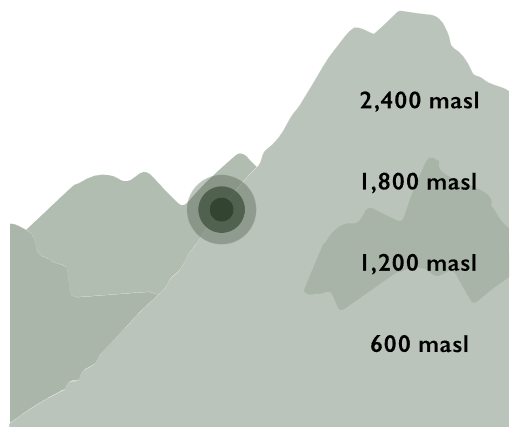
Nestled at an elevation of 500m-600m above sea level, the Central Highlands of Vietnam boast rich red basalt soil and a cool, rainy climate—perfect conditions for cultivating exquisite Robusta coffee for centuries. This region’s beans are famed for their potent caffeine content, bold flavors, and low acidity, enticing coffee aficionados worldwide.
Yet, the allure of Central Highlands coffee lies in its unique regional nuances. Some beans enchant with silky notes of butter, oil, or caramel, while others capture the essence of the sun-kissed highlands and crisp mountain breezes. Discover the captivating tastes that have made Central Highlands coffee a cherished treasure for generations.
Environment
Climate factors such as precipitation, temperature, and humidity play a crucial role in shaping a coffee’s maturation, overall flavor, and quality. Coffee-producing countries either boast naturally ideal conditions for growth or employ innovative techniques to enhance their ecosystems.
Robusta coffee, in particular, thrives in a harmonious dance with its environment, flourishing under the tender care of nature’s elements. As you indulge in its rich, bold flavors, you’ll savor the exquisite results of this intricate interplay.
Precipitation
500m – 800m
Temperature
17℃
Humidity
71%
Processing
Coffee processing involves separating the bean from the cherry, with popular methods like washed, dry, and honey, among others. Each technique emphasizes different aspects to create unique flavors, inviting you to explore and savor the diverse world of coffee.
Washed
Fully Washed
Dried
Sun-dried
Natural
Fully Washed
Timeline
Harvest and export times are based off when a particular coffee will be at its peak quality. Cherries picked at the start of the harvest season tend to be underdeveloped, and those picked at the end are often overdeveloped, so producers aim for that sweet
Harvest
Oct – Apr
Export
Dec – Sept
Dak Lak Viet Nam
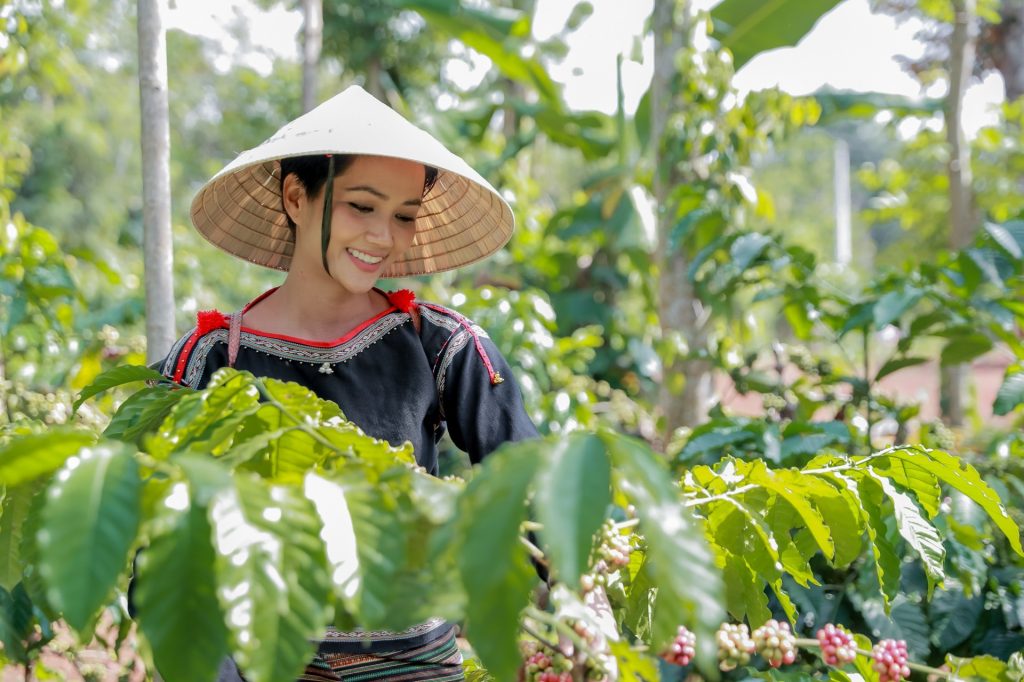
Dak Lak Province, nestled in Vietnam’s Central Highlands, earns its title as the “capital” of Vietnamese coffee with its sprawling green coffee fields cascading across the region’s basaltic hills, bathed in sunlight and caressed by gentle winds. Home to numerous distinguished coffee brands, Dak Lak’s exceptional beans have captured hearts worldwide, with exports reaching over 80 countries and territories, solidifying its global reputation for exceptional coffee.