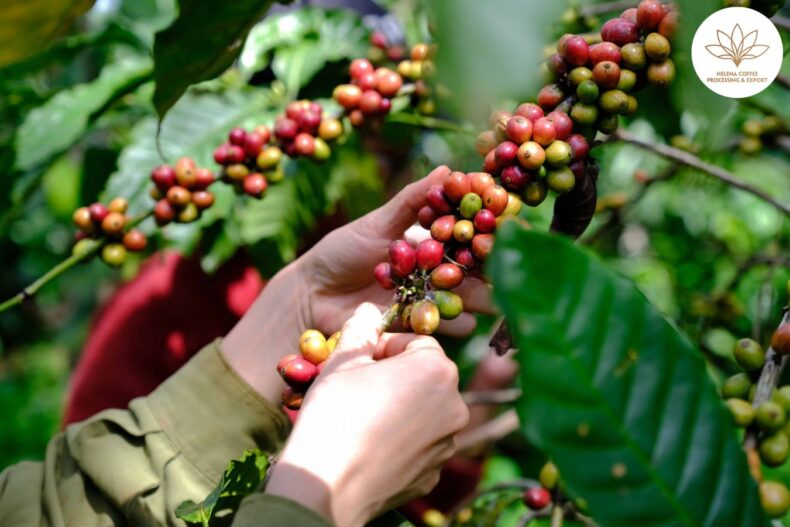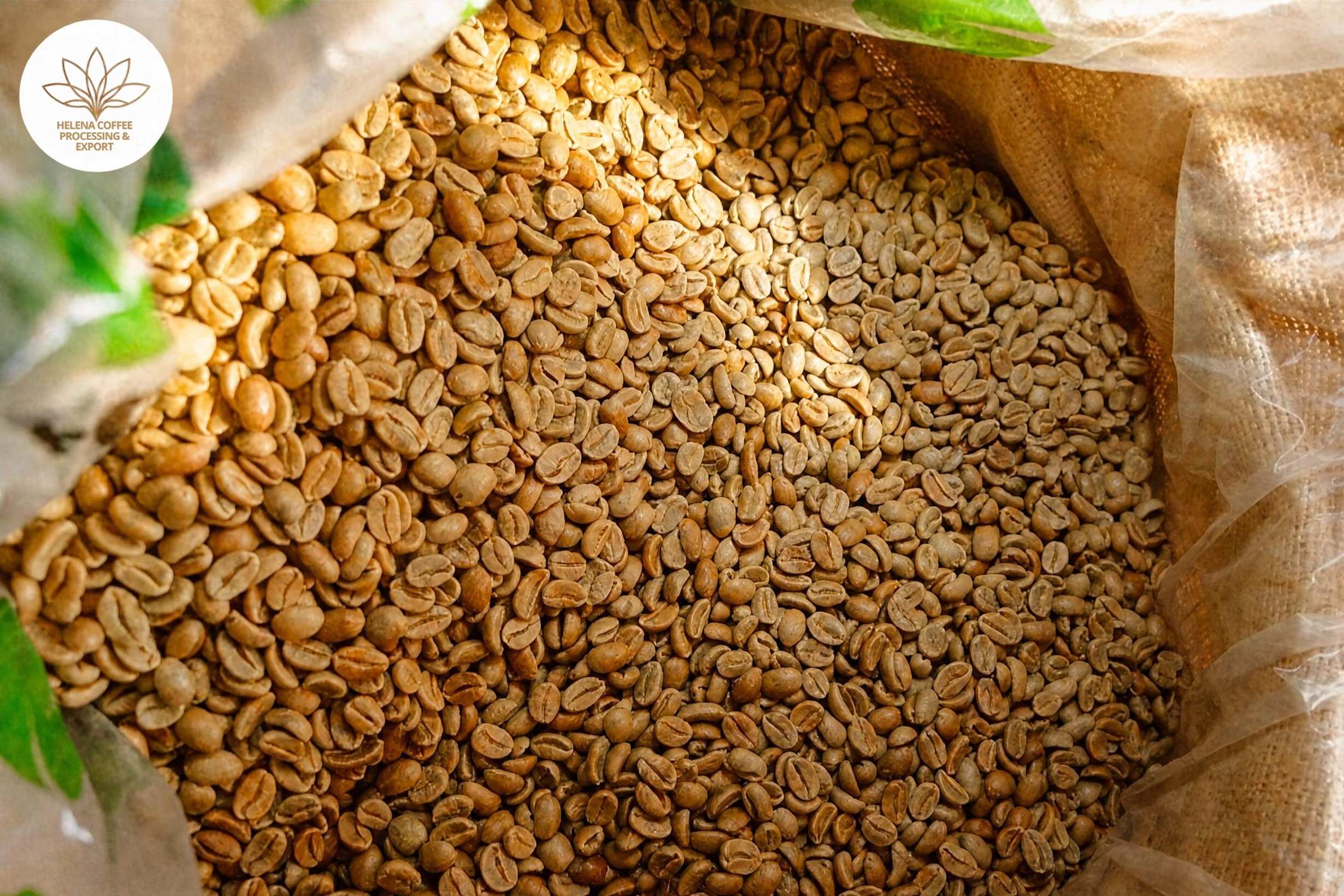
The journey of coffee from origin to the final cup is a long and delicate process. After harvesting and primary processing, green coffee beans are packed and stored before embarking on international maritime transit to roasters worldwide. Considering the lengthy transit times and exposure to high relative humidity at sea, choosing the right packaging and storage method is vital. The primary objective is mitigating quality deterioration—ensuring that every lot retains its vibrant freshness, complex acidity, and rich aromatics.
Why Does Proper Green Coffee Storage Matter?
Moisture content is one of the key parameters to check before green coffee enters storage. Coffee beans can absorb or release moisture depending on their surrounding environment. Prolonged exposure to high humidity can increase the risk of mold growth, discoloration, and undesirable flavors.
In green coffee trading, a moisture content of approximately 10–12.5% is often used as a reference range. However, the acceptable specification should depend on the coffee type, contract requirements, and buyer expectations.
Water activity is another useful indicator because it measures how much water is available to participate in biological and chemical processes. A 2019 study published in the Journal of Stored Products Research found that hermetic bags showed potential for maintaining green coffee moisture content, water activity, and sensory quality during storage.
Green coffee beans are hygroscopic; they readily absorb and release moisture according to surrounding ambient conditions. Inadequate storage exposes coffee to severe quality threats:
Flavor Fading & Past-Crop Degradation: Oxidation breaks down organic volatile compounds, causing delicate origin notes to fade into dull, woody, or baggy flavors.
Mold Formation & Mycotoxins: Moisture levels exceeding safe limits ($>12.5\%$) create fertile ground for mold growth and Ochratoxin A (OTA) contamination, leading to rejected shipments at destination ports.
Color Bleaching: Unprotected beans lose their rich blue-green or jade luster, fading into pale yellowish hues, which diminishes their market grade.
Choose the Right Packaging for Green Coffee Storage
Packaging determines how effectively coffee is protected from external air and moisture. The most suitable option depends on the value of the coffee, storage duration, shipment size, and transportation conditions.
Traditional Burlap / Jute Bags
Overview: Jute bags are natural, biodegradable, affordable, and deeply rooted in coffee history, typically standardized at 60kg or 69kg per bag.
Limitations: The woven porous structure allows gases and moisture to pass through freely. Burlap provides zero barrier against oxidation or humidity spikes, making it suitable only for short domestic transport or rigorously climate-controlled warehouses.

Standard Plastic Liners & Container Bulk Liners
Overview: Highly favored for large-scale commercial shipments. Dry container liners allow traders to transport green coffee in bulk or lined bags efficiently.
Limitations: Conventional polyethylene provides basic moisture resistance but possesses moderate oxygen barrier properties. Over long sea voyages, shifts in ambient temperature can lead to condensation inside the container (“cargo sweat”), potentially wetting the top layers of coffee.
High-Barrier Hermetic Packaging (e.g., GrainPro, Hermética)
Overview: The modern benchmark for specialty coffee and high-grade commercial lots. These multi-layer liners (utilizing specialized nylon, EVOH, or barrier resins) fit securely inside traditional burlap bags.
Key Benefits: Hermetic sealing restricts gas exchange, creating a low-oxygen, high-CO₂ micro-environment. This halts pest reproduction, repels external moisture, and extends bean shelf life for over 12–18 months without discernible cup degradation.
Vacuum Packing (Brick Packs)
Overview: Air and oxygen are completely evacuated before the bag is hermetically sealed and packed into protective 30kg cartons.
Application: While representing the highest packaging cost per pound, vacuum sealing is the definitive solution for high-scoring microlots, Cup of Excellence (COE) selections, and pre-shipment evaluation samples.
Maintain a Clean, Dry, and Well-Managed Warehouse
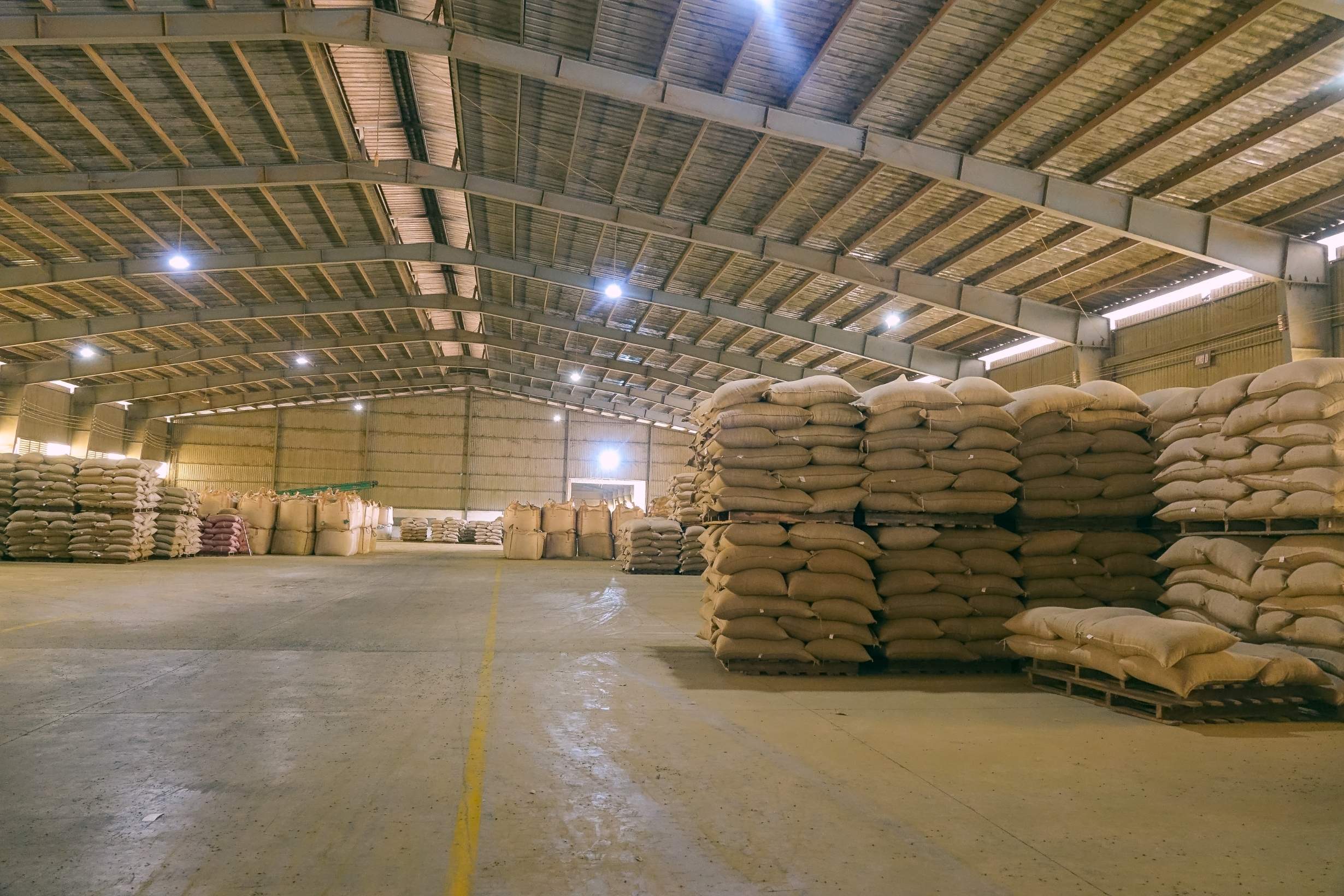
A suitable green coffee warehouse should minimize excessive humidity, water leaks, direct sunlight, and significant temperature fluctuations. The storage area should be clean and free from chemical, fuel, or other strong odors that could affect the coffee.
Bags should be placed on clean, dry pallets, with adequate clearance from floors and walls to limit moisture exposure and allow inspection. Storing coffee directly on the floor or against damp walls increases the risk of unwanted moisture transfer.
Warehouse hygiene, pest control, and environmental monitoring are equally important. Proper stock organization also helps teams inspect individual lots, apply first-in, first-out practices where appropriate, and avoid unnecessarily long storage periods.
Protect Green Coffee During International Shipping
Ocean freight presents additional challenges because shipments may travel for weeks under changing temperature and humidity conditions. Condensation inside shipping containers, commonly known as container rain, can expose packaging and coffee to unwanted moisture.
Before loading, exporters should inspect the container to ensure that the floor and walls are clean and dry, with no leaks or unusual odors. Coffee bags should be intact, securely arranged, and protected from direct contact with damp surfaces.
For long-distance shipments or coffee requiring stricter preservation, suitable high-barrier packaging and appropriately selected desiccants may help manage moisture exposure. A 2023 study published in the Journal of Agriculture and Food Research found that combining hermetic packaging with suitable desiccants can support moisture control under storage and simulated transportation conditions.
These measures should be selected according to the route, container conditions, shipment duration, and coffee specifications rather than applied identically to every shipment.
Build a Consistent Quality Control Process
Effective green coffee storage requires more than selecting the right bag. It also depends on a consistent quality management process throughout the supply chain.
Coffee businesses should monitor moisture content, physical appearance, odor, packaging integrity, and any other quality parameters specified in the purchase contract.
Storage records should include lot identification, arrival date, origin, inspection results, warehouse location, and dispatch history. For specialty coffee, periodic sampling and sensory evaluation can help identify changes in aroma, cup cleanliness, and overall flavor characteristics.
These records also strengthen traceability and provide international buyers with greater transparency when evaluating suppliers.
Helena Coffee: Supporting Quality Across the Green Coffee Supply Chain
For B2B buyers, maintaining green coffee quality from origin to delivery is essential for building reliable, long-term business relationships. At Helena Coffee, clear communication about product specifications, quality requirements, packaging, and delivery terms helps buyers identify solutions that match their sourcing needs.
From Robusta grown in Dak Lak to Vietnamese Arabica offerings, each lot should be evaluated according to its characteristics and the buyer’s requirements.
Proper green coffee storage is a critical step in preserving bean value throughout the journey from farm to roaster. By managing moisture, packaging, warehouse conditions, and transportation risks, coffee businesses can reduce quality-related risks and build a more dependable supply chain.
Contact Helena Coffee to discuss Vietnamese green coffee options, product specifications, and sourcing requirements for your business.
👉 Visit www.helenacoffee.vn or Info@helenacoffee.vn to explore our products and request a direct quote today!