A useful caffeine comparison starts with an uncomfortable fact: most people have no idea how much caffeine they actually consume. A “cup of coffee” can mean anything from a 30 ml espresso to a 500 ml takeaway, and a can of energy drink may contain more or less than either. This guide puts the common drinks side by side using typical serving sizes, explains why the numbers vary so much and shows where decaf sits on the scale. It is written for consumers who want to manage their intake and for roasters and brand owners who need to explain caffeine clearly in 2026. It is general information, not medical advice.
Why a Caffeine Comparison Is Harder Than It Looks
Caffeine content depends on four variables that interact: the raw material, the preparation, the serving size and the dose. Robusta beans carry roughly twice the caffeine of Arabica. Tea leaves vary by cultivar and harvest. Brewing method changes how much caffeine is extracted; a long immersion pulls out more than a quick pour. Serving size then multiplies the concentration, which is why a weak but large mug can out-caffeinate a strong but tiny espresso. Finally, the dose per cup matters: a barista using 18 g of coffee for a double shot delivers more than a home brewer using 7 g for a single. Any comparison table is therefore a set of typical midpoints, not laboratory certainties.
Caffeine Comparison Table: Typical Servings
| Drink | Typical serving | Caffeine (approx.) |
|---|---|---|
| Brewed filter coffee (Arabica) | 240 ml | 80–100 mg |
| Brewed filter coffee (Robusta blend) | 240 ml | 120–160 mg |
| Espresso, single shot | 30 ml | 60–75 mg |
| Instant coffee | 240 ml (2 g) | 60–80 mg |
| Decaf brewed coffee | 240 ml | 2–7 mg |
| Decaf espresso | 30 ml | 2–8 mg |
| Black tea | 240 ml | 40–60 mg |
| Green tea | 240 ml | 25–40 mg |
| Matcha | 240 ml (2 g powder) | 60–75 mg |
| Yerba mate | 240 ml | 65–85 mg |
| Energy drink | 250 ml can | 75–85 mg |
| Energy drink, large | 473–500 ml can | 150–200 mg |
| Cola | 355 ml can | 30–45 mg |
| Dark chocolate | 30 g | 15–25 mg |
Figures are typical ranges drawn from widely cited nutritional references; individual products vary.
Regular Coffee: Species, Roast and Brew Method
Coffee occupies the widest band in the table because it has the most variables. Species is the largest: Arabica beans contain around 1.2–1.5% caffeine by dry weight, while Robusta sits around 2.2–2.7%. A roaster using a Robusta Grade 1 Screen 18 in a blend is deliberately raising the caffeine, body and crema of the cup. Roast degree changes caffeine very little by weight, although dark-roasted beans are less dense, so a scoop of dark roast contains slightly fewer beans and marginally less caffeine than the same scoop of light roast. Brew method matters through contact time and ratio: cold brew concentrates and long French-press steeps extract heavily, while a short espresso extracts less caffeine in absolute terms despite its intensity.
Decaf Coffee: Small but Not Zero
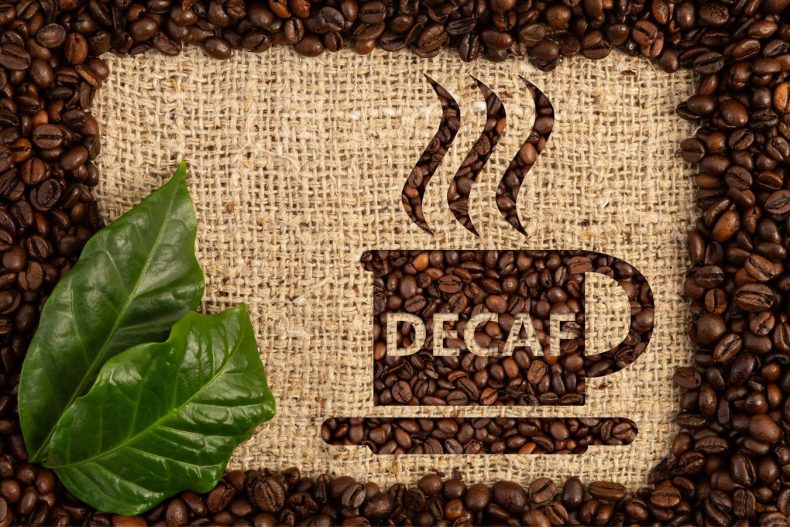
Decaf is not caffeine-free. Regulations in the European Union require roasted decaf to contain no more than 0.1% caffeine by dry matter, and the US convention is removal of at least 97% of original caffeine. In a cup, that works out to roughly 2–7 mg for a 240 ml brew, compared with 80–100 mg or more for regular coffee. Someone drinking four decafs a day therefore consumes about the caffeine of a quarter cup of regular. Decaf made from Robusta can sit slightly higher within the range because the starting caffeine was higher, although a well-processed Decaffeinated Robusta Dak Lak Grade 1 still meets the same legal threshold. Our detailed article on how much caffeine is in decaf covers testing and variation by method.
Tea: Black, Green, Matcha and the L-Theanine Factor
Tea generally delivers less caffeine per cup than coffee, but the gap is narrower than many assume. A strong black tea steeped for five minutes can approach 60–70 mg, close to a weak coffee. Green tea is lower mainly because it is brewed cooler and shorter, not because the leaf contains dramatically less caffeine. Matcha is the exception that proves the rule: because you consume the whole powdered leaf rather than an infusion, a bowl can match an espresso. Tea also contains L-theanine, an amino acid widely reported to smooth the subjective effect of caffeine, which is why tea drinkers often describe a calmer alertness despite comparable caffeine. Decaffeinated teas, like decaf coffee, retain a few milligrams per cup.
Energy Drinks and Soft Drinks
A standard 250 ml energy drink contains roughly 80 mg of caffeine, close to a cup of filter coffee, while the large cans sold at petrol stations and convenience stores commonly carry 150–200 mg, equivalent to two cups. The difference from coffee lies in the accompanying ingredients, typically sugar or sweeteners, taurine, B vitamins and sometimes guarana, which itself contains caffeine that may or may not be counted in the headline figure. Many jurisdictions require caffeine content labelling and warnings on energy drinks above a set concentration. Cola-type soft drinks are much lower at 30–45 mg per can, but they are often consumed in larger volumes and by younger people, which is why health authorities tend to focus on them in advice for children and adolescents.
Chocolate, Supplements and Hidden Sources
Caffeine turns up where people do not expect it. Dark chocolate contributes 15–25 mg per 30 g serving and milk chocolate much less. Cocoa drinks, coffee-flavoured yoghurts and ice creams, pre-workout powders, some pain relievers and weight-management supplements all add to the daily total, sometimes significantly: a single pre-workout scoop may contain 150–300 mg. Decaf coffee itself is a hidden source in reverse, delivering less than people fear. For anyone tracking intake precisely, the practical approach is to log the big contributors, coffee, tea and energy drinks, and treat chocolate and food as a small rounding allowance unless supplements are involved.
Daily Intake Guidelines from Health Authorities
Health authorities in Europe and North America generally advise that up to around 400 mg of caffeine per day is not associated with safety concerns for healthy adults, with single doses of up to roughly 200 mg considered acceptable. For pregnant and breastfeeding women the commonly cited ceiling is around 200 mg per day. For children and adolescents, guidance is usually expressed per kilogram of body weight, around 3 mg/kg, which translates to very modest amounts. Translating this into the table above, 400 mg is roughly four cups of filter coffee, or two large energy drinks, or a great many cups of decaf. These are general figures, not personal medical advice; individual sensitivity varies and anyone with a health condition should consult a professional.
Timing: How Long Caffeine Stays in Your System
Caffeine’s half-life, the time for blood levels to fall by half, averages around five hours in healthy adults but ranges from roughly three to seven depending on genetics, liver function, smoking, pregnancy and some medications. A 100 mg coffee at 3 pm therefore leaves around 50 mg active at 8 pm and 25 mg at 1 am, which is why afternoon coffee affects sleep for many people. Decaf at 2–7 mg per cup becomes negligible within a few hours. Switching to decaf after midday, or to a half-caf blend, is the simplest lever most people have. Read more in our guides to decaf coffee and sleep and half-caf blends.
Robusta vs Arabica: The Species Question
For roasters and brand owners the species decision is also a caffeine decision. A pure Robusta espresso blend can carry nearly twice the caffeine of a pure Arabica one at the same dose. That is a selling point for a morning “strong” blend and a drawback for an afternoon line. Decaffeination largely removes the difference, because both species are brought down to the same legal ceiling, so a Robusta decaf offers Robusta body and crema without the caffeine load. Many brands therefore run a Robusta-rich regular blend for the morning and pair it with a Robusta decaf or a Decaffeinated Arabica Lam Dong Grade 1 for later in the day, keeping the flavour family consistent across both.
Using the Comparison in Daily Life and on the Label
For consumers, the table is most useful as a budgeting tool: decide a daily ceiling, assign typical values to your regular drinks and notice where the large servings and energy drinks push you over. For businesses, the comparison supports honest communication. Stating “approximately 80 mg per cup” or “less than 5 mg per cup for our decaf” on a menu or website builds trust and helps customers choose. Avoid presenting ranges as exact figures, and remember that brewing instructions change the result. If you sell both regular and decaf, offering a half-caf option covers the middle ground for drinkers who want to reduce rather than eliminate caffeine.
Frequently Asked Questions About Caffeine Comparison
Does espresso have more caffeine than filter coffee?
Per millilitre, yes; per serving, usually no. A 30 ml single espresso contains roughly 60–75 mg, while a 240 ml filter coffee contains around 80–100 mg or more. A double espresso roughly matches a filter cup. The concentration of espresso creates the impression of a stronger caffeine hit.
How much caffeine is in decaf compared with regular coffee?
A 240 ml cup of decaf typically contains 2–7 mg of caffeine, versus 80–100 mg for Arabica filter coffee and more for Robusta blends. That is roughly 3–5% of the regular amount, consistent with regulations requiring removal of at least 97% of the original caffeine.
Is tea lower in caffeine than coffee?
Usually. Black tea delivers around 40–60 mg per cup and green tea 25–40 mg, compared with 80–100 mg for filter coffee. Matcha is the exception at 60–75 mg because the whole leaf is consumed. Steeping time and leaf quantity change the result considerably.
Do energy drinks contain more caffeine than coffee?
A standard 250 ml can has about 75–85 mg, similar to a cup of coffee. Large 473–500 ml cans carry 150–200 mg, roughly two cups. Energy drinks also contain sugar, taurine and sometimes guarana, so the overall effect differs from coffee even at equal caffeine.
How much caffeine per day is considered acceptable?
Health authorities generally advise up to around 400 mg per day for healthy adults and around 200 mg for pregnant women, with lower per-kilogram limits for children. These are general guidelines, not medical advice; sensitivity varies and people with health conditions should seek professional guidance.
Why does Robusta have more caffeine than Arabica?
Caffeine is a natural defence compound in the coffee plant, and Robusta evolved at lower, warmer altitudes with more pests, so it produces roughly 2.2–2.7% caffeine by dry weight versus 1.2–1.5% for Arabica. After decaffeination both species are brought to the same low legal ceiling.
Work With Helena Coffee Vietnam
Helena Coffee Vietnam has exported green coffee, instant coffee and OEM/private-label products to 55+ countries since 2016. Free samples, response within 24 hours.
Email: director@helenacoffee.vn · WhatsApp/Zalo: +84 837 889698 · Browse our products