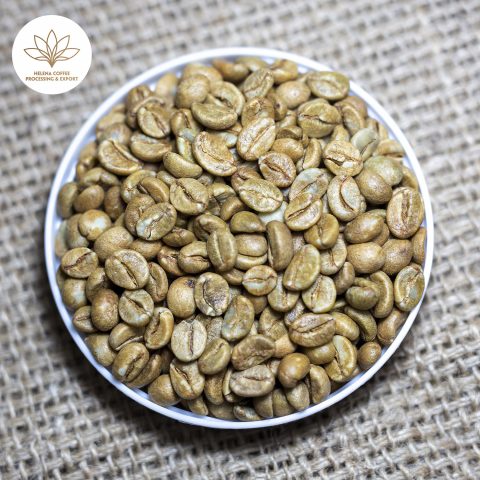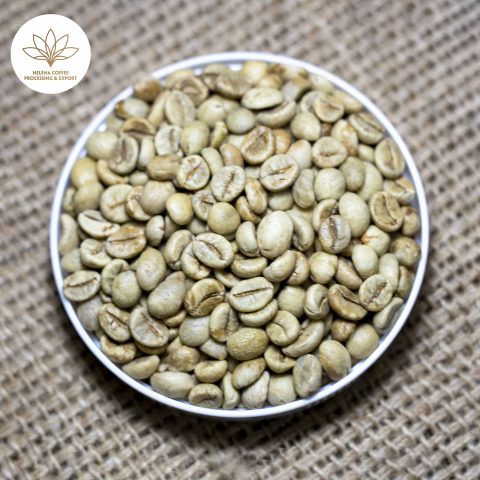


Excelsa Coffee Grade 1 Screen 16 – Cleaned Specialty Excelsa from Vietnam
Excelsa Coffee Grade 1 is the best excelsa Helena Coffee Vietnam offers: beans cleaned and screened so that 90% stay above screen 16, with no more than 2% defective beans, 0.5% foreign matter and 12.5% moisture. It is a rare coffee with a tart, fruity cup, and this grade is clean enough to sell as a single origin or to feature in a specialty blend.
Why roasters are looking at excelsa coffee beans
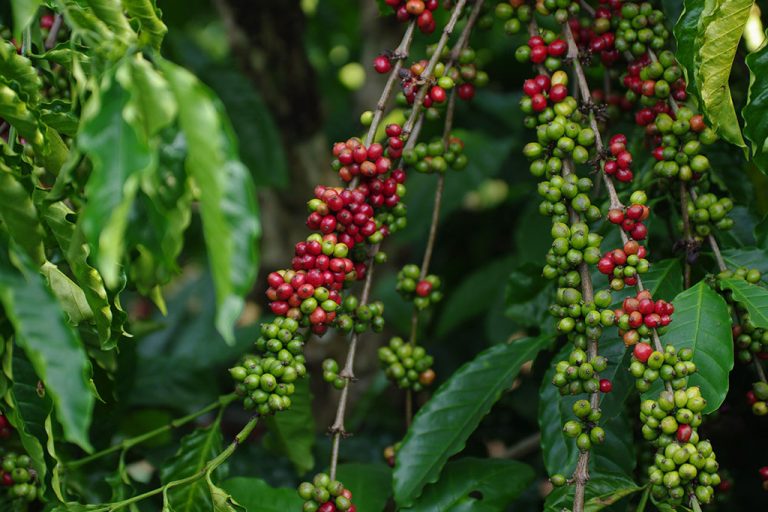
Excelsa, long classified as a variety of Coffea liberica and now proposed by researchers as a separate species, is one of the least known coffees in the world. Its tart, dark-fruit profile gives roasters a way to offer something genuinely new, and its trees cope well with heat and drought, which is drawing attention as growers look for climate-resilient crops. Vietnam grows excelsa on a small scale, so each harvest yields limited volumes of Grade 1 beans.
Every lot of Excelsa Coffee Grade 1 is hand-checked after machine cleaning, because excelsa beans vary more in shape and colour than robusta. That extra step is what keeps defects at 2% or less and makes the beans attractive enough for specialty retail packs.
Specifications
| Origin | Vietnam |
|---|---|
| Species | Excelsa (Coffea liberica var. dewevrei) |
| Grade | Grade 1, cleaned |
| Screen size | 90% min above screen 16 |
| Moisture | 12.5% max |
| Foreign matter | 0.5% max |
| Defective beans | 2% max |
| Cleanliness | Thoroughly cleaned to remove impurities |
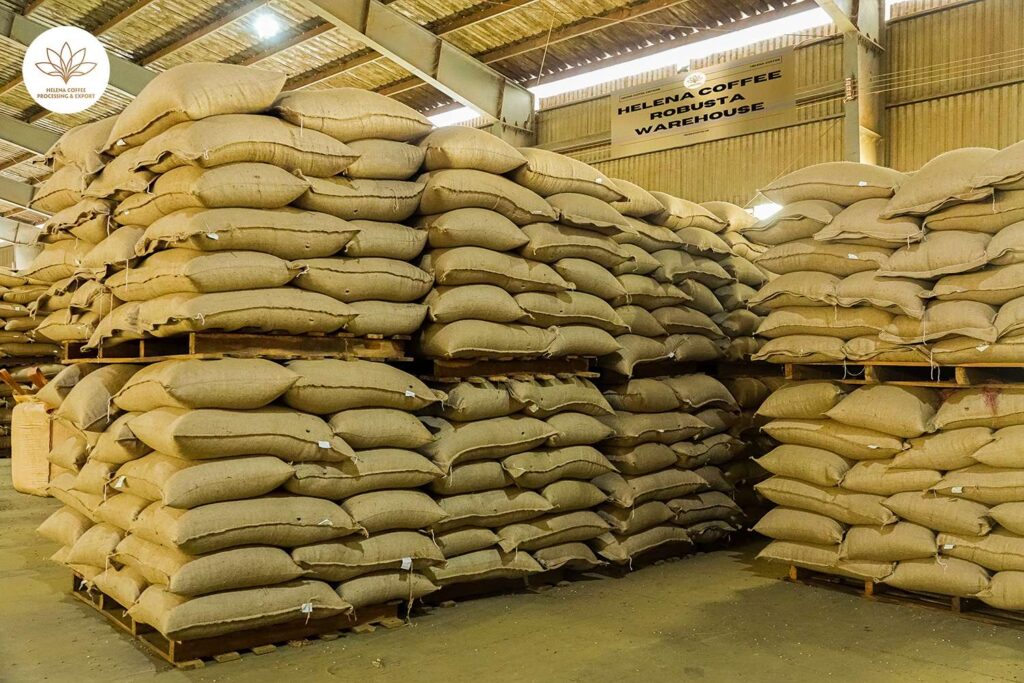
| Packaging | 60 kg jute bags or 25 kg vacuum bags |
Cup profile of Excelsa Coffee Grade 1
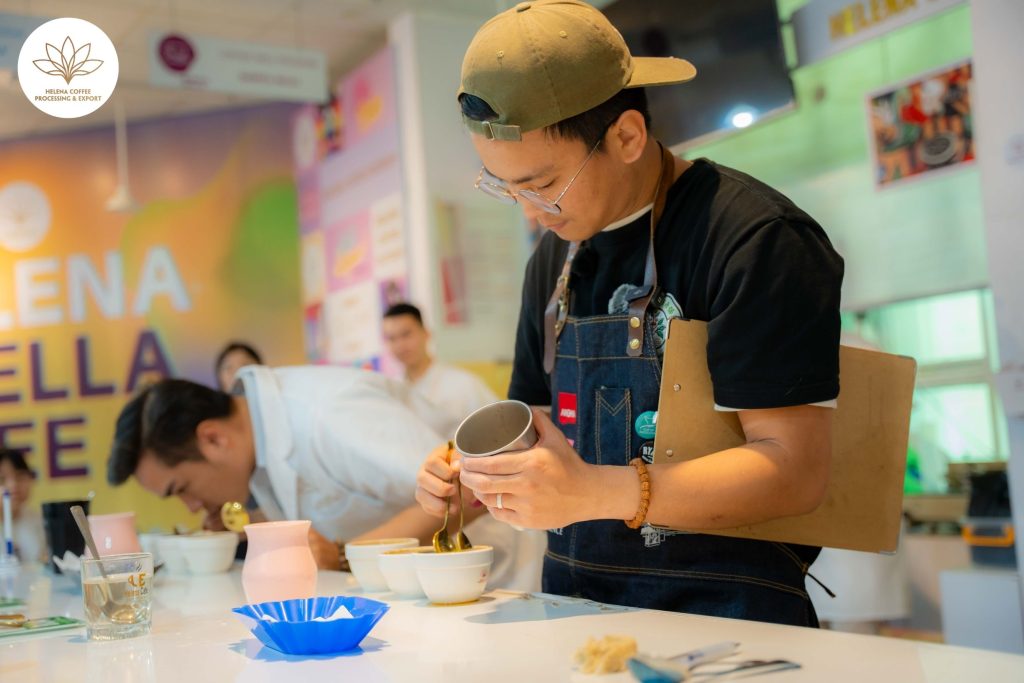
Expect tart, dark-fruit notes with a distinctive complex character, a light-to-medium body and a long finish. Excelsa Coffee Grade 1 shines as a light or medium roast for filter and pour-over, where its fruit and acidity stand out, and it adds a memorable top note to espresso blends at 10–20%. Because the beans are cleaned to a low defect count, the cup is clean enough for cupping tables and specialty menus.
For roasters who want to tell a story, excelsa coffee beans from Vietnam pair well with our liberica and fine robusta lots in a three-species tasting flight, a format that works well for cafés and subscription boxes.
Terms for buyers of Excelsa Coffee Grade 1
- Availability: limited each harvest; ask for current stock and minimum order.
- Packaging: 60 kg jute bags or 25 kg vacuum bags; GrainPro liners on request.
- Pricing: FOB Ho Chi Minh City, CFR or CIF, confirmed by signed PI.
- Payment: 30% T/T deposit and 70% balance by T/T, or irrevocable L/C at sight.
- Shipping: full, mixed or LCL shipments depending on volume.
- Documents: commercial invoice, packing list, bill of lading, Certificate of Origin, ICO certificate, phytosanitary and fumigation certificates.
Frequently asked questions
Is Excelsa Coffee Grade 1 suitable as a single origin?
Yes. With only 2% defects and 0.5% foreign matter, it is clean enough to roast and sell on its own as a specialty single origin.
How should I roast excelsa?
Start with a light-to-medium roast to keep the fruit and acidity, then adjust. Excelsa beans are dense, so a steady heat application through the middle of the roast helps develop sweetness.
Do you offer a cheaper excelsa grade?
Yes. Our Excelsa Grade 2 allows up to 5% defects and is priced for blending.
Related products from Helena Coffee
You may also be interested in Excelsa coffee Grade 2, Vietnam Liberica coffee beans, Fine Robusta natural anaerobic, or browse our full range of Vietnamese Robusta green coffee beans.
Discover Excelsa Coffee Grade 1 from Vietnam. Request a sample and quotation from Helena Coffee: email info@helenacoffee.vn, WhatsApp +84 789 818 828, or use our contact page.

Related products
Vietnam Wet-processed Robusta Coffee Beans (S16, S18)
Original price was: $7.00.$6.59Current price is: $6.59. Request a Quote / Ask for SampleAdd to cart