Coffee processing is often discussed in terms of flavor, fermentation, and roasting, but one fascinating factor remains largely overlooked: Abscisic Acid (ABA). Although invisible to the naked eye, this plant hormone may influence how coffee seeds behave after harvest and could even help explain why washed coffees often appear blue-green while natural coffees tend to be yellow-green.
While this idea is still considered a scientific hypothesis, recent studies in plant physiology and coffee science suggest that Abscisic Acid (ABA) plays a central role in seed dormancy, metabolism, and post-harvest biological activity. Understanding ABA offers a new perspective on coffee not just as a beverage, but as a living seed that continues to undergo biological changes long after it has been picked.
What Is Abscisic Acid (ABA)?
Abscisic Acid (ABA) is one of the five major plant hormones that regulate plant growth and survival. It is naturally produced by plants in response to environmental stress such as drought, heat, and water deficiency.

Its primary functions include:
- Maintaining seed dormancy
- Preventing premature germination
- Regulating water balance
- Controlling stomatal closure during drought
- Coordinating plant responses to environmental stress
Unlike growth-promoting hormones such as gibberellins, ABA functions as a biological “brake,” helping plants conserve energy and survive unfavorable conditions.
Coffee Beans Are Living Seeds
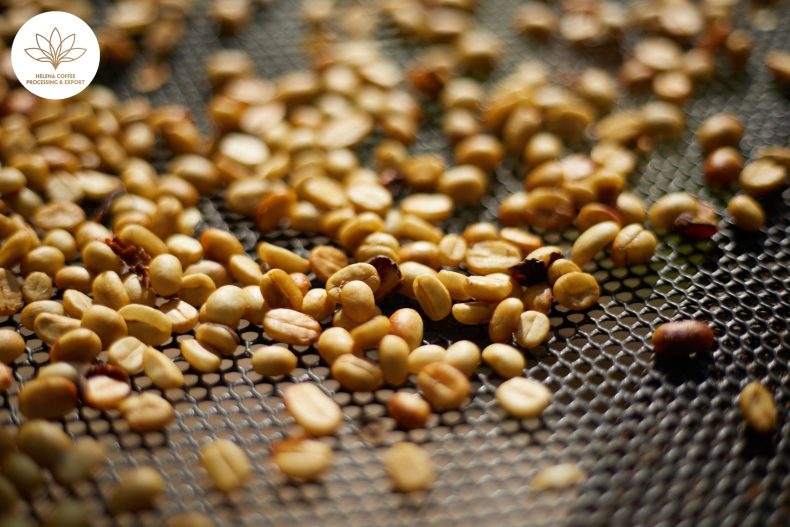
One fact many coffee drinkers don’t realize is that green coffee beans are still living seeds. Even after harvesting and processing, coffee seeds remain biologically active. They continue low-level metabolic activity to preserve their ability to germinate if environmental conditions become favorable.
This means the internal chemistry of a coffee bean is never completely static. Instead, metabolism continues slowly during drying, storage, and transportation. Research published by Lee et al. (2015) and De Bruyn et al. (2017) demonstrated that microbial activity and biochemical reactions continue throughout coffee processing, particularly during natural drying methods.
How Abscisic Acid (ABA) Works During Natural Processing
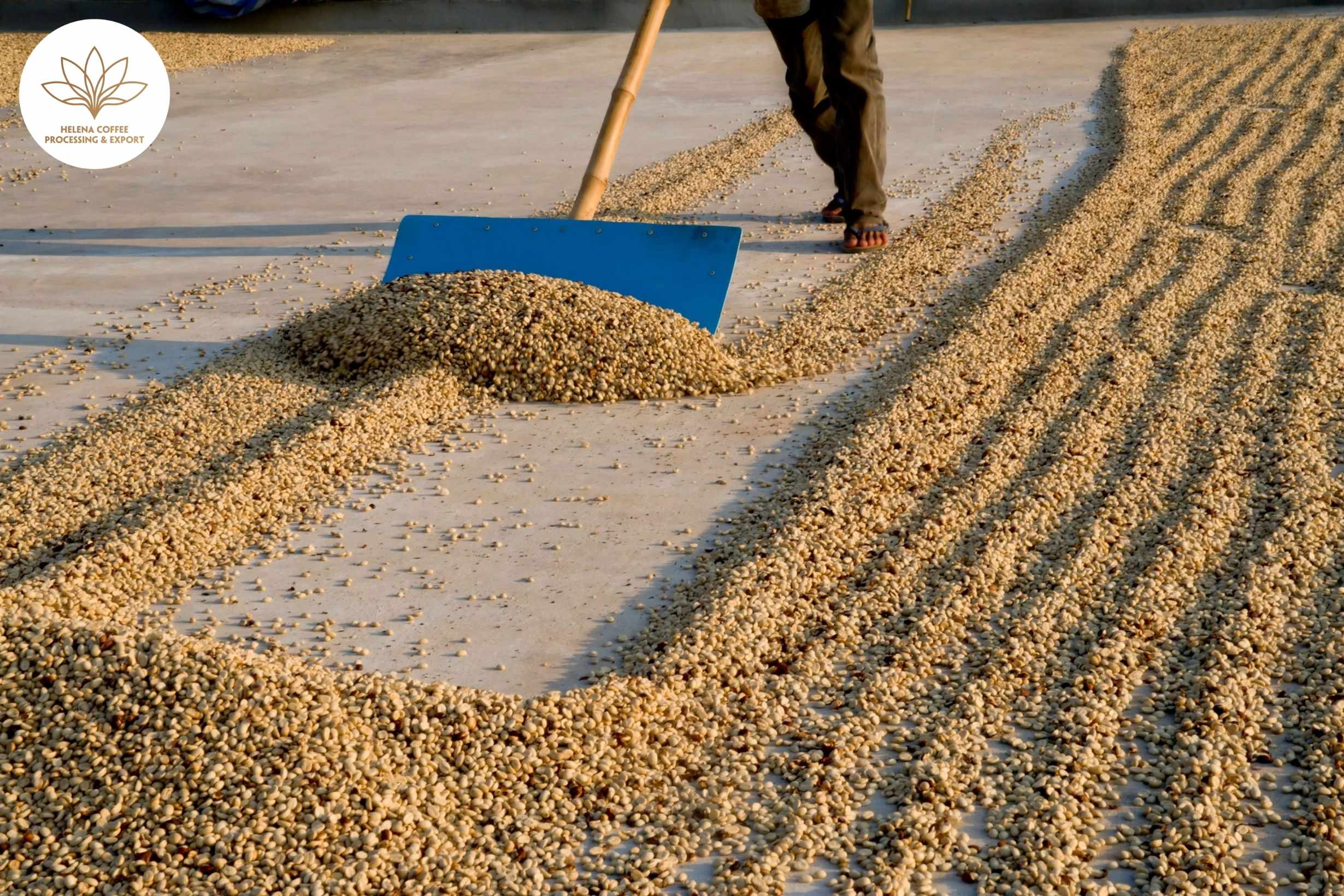
In Natural (Dry) Processing, the entire coffee cherry dries with the fruit still surrounding the seed.
According to the hypothesis proposed by Dr. Anja Rahn (Dr. Kôfē), this remaining fruit continues supplying Abscisic Acid (ABA) to the seed throughout the drying period.
As a result:
- Seed dormancy remains active.
- Germination signals remain suppressed.
- Internal metabolism stays relatively stable.
- Oxidative activity remains comparatively low.
This prolonged dormancy may help explain why natural coffees often display their characteristic yellow-green appearance. Although further experimental evidence is required, the hypothesis aligns well with established knowledge of ABA’s role in maintaining seed dormancy across many plant species.
What Changes During Washed Coffee Processing?
Washed coffee follows a very different path. Soon after harvesting, the pulp and mucilage are removed from the seed. Without the surrounding fruit, the seed also loses its continuous external source of Abscisic Acid (ABA). This may trigger several biological changes. Researchers suggest the seed begins receiving signals that favorable conditions for germination may eventually arrive.
Consequently:
- Dormancy weakens.
- Metabolic activity increases.
- Cellular respiration becomes more active.
- Reactive Oxygen Species (ROS) begin accumulating.
Rather than simply being harmful molecules, ROS also function as important signaling compounds inside living plant tissues.
The Connection Between ABA and Reactive Oxygen Species
Modern plant biology has revealed a fascinating relationship between ABA and Reactive Oxygen Species (ROS). Instead of acting independently, both molecules regulate one another during seed development and dormancy.
Scientific studies indicate:
- High ABA generally suppresses germination.
- Declining ABA allows ROS signaling to increase.
- ROS help activate metabolic pathways associated with germination.
This biochemical balance has been documented in numerous seed physiology studies across agricultural crops. For coffee, the same mechanism may continue operating even after harvest while the seed remains alive.
Can ABA Influence Green Coffee Color?
Perhaps the most intriguing hypothesis concerns green bean color.
Most coffee professionals recognize that:
- Washed coffees often appear blue-green.
- Natural coffees usually appear yellow-green.
For decades, this difference has been accepted without a complete biological explanation. Dr. Anja Rahn proposes that changes in the seed’s internal oxidation state may contribute to these visual differences.
If pigments inside green coffee behave similarly to redox indicators, then:
- Lower oxidation (associated with higher ABA activity) could favor yellow-green coloration.
- Greater oxidation (following ABA reduction and increased ROS) could shift pigments toward blue-green.
Importantly, this mechanism has not yet been experimentally confirmed. Current evidence remains theoretical, requiring further biochemical and spectroscopic research. Nevertheless, the hypothesis offers an exciting bridge between plant physiology, post-harvest processing, and coffee quality.
Why This Matters for Coffee Processing
Understanding Abscisic Acid (ABA) changes how we think about coffee processing. Traditionally, processing has been viewed mainly as a way to remove fruit before drying. However, if ABA continues influencing seed biology during processing, then every processing method also becomes a biological intervention.
Different processing techniques may regulate:
- Dormancy duration
- Oxidative metabolism
- Internal biochemical pathways
- Pigment stability
- Potential flavor precursor development
This perspective helps explain why coffee processing is increasingly studied using plant physiology rather than only fermentation science.

Scientific Evidence Supporting the Role of ABA
Although coffee-specific ABA research remains limited, broader plant science strongly supports its biological importance.
Several key findings include:
- ABA is the dominant hormone regulating seed dormancy in higher plants.
- ROS and ABA work together to regulate germination signals.
- Seed metabolism continues after harvest in many crop species.
- Coffee remains metabolically active during drying.
Meanwhile, studies by Lee et al. (2015) and De Bruyn et al. (2017) confirmed that post-harvest microbial and biochemical activity continues throughout coffee processing, particularly in natural coffees. Although direct experimental evidence linking ABA to green bean color is still unavailable, these findings provide a strong scientific framework for future research.
The Future of Coffee Science
As specialty coffee continues evolving, researchers are moving beyond traditional topics such as roasting and fermentation. Plant physiology is becoming an increasingly important field for understanding coffee quality.
Future studies may investigate:
- ABA concentration during different processing methods
- ROS dynamics inside coffee seeds
- Pigment chemistry responsible for blue-green coloration
- Relationships between ABA, dormancy, and cup quality
- Biological markers predicting coffee stability during storage
Such discoveries could fundamentally change how coffee professionals evaluate green coffee quality.
Helena Coffee Vietnam – Combining Coffee Science with Quality
At Helena Coffee Vietnam, we believe every coffee bean tells a scientific story. From cultivation and harvesting to processing and export, understanding concepts like Abscisic Acid (ABA) helps us better appreciate the biological processes that shape coffee quality. By combining careful post-harvest practices with strict quality control, we deliver premium Robusta, Arabica, and specialty coffees that preserve their natural characteristics while meeting the highest international standards. Because exceptional coffee begins with understanding the science behind every bean.
Conclusion
Abscisic Acid (ABA) may be one of the smallest components inside a coffee seed, yet it could have an enormous influence on post-harvest biology. While the hypothesis connecting ABA to green coffee color remains under investigation, it highlights an important truth: green coffee is not an inert product but a living seed undergoing continuous biological change.
As research advances, understanding ABA could help explain not only differences in bean appearance but also new aspects of coffee processing, seed physiology, and quality development bringing us one step closer to understanding the remarkable science hidden inside every coffee bean.
👉 Visit www.helenacoffee.vn or Info@helenacoffee.vn to explore our products and request a direct quote today!