Coffee prices moved higher during the first week of July as both the London and New York futures markets posted strong gains. The rally was driven primarily by slower-than-expected harvesting in Brazil, persistent rainfall disrupting field operations, and farmers holding back sales despite rising production. These factors have tightened short-term supply expectations and provided strong support for global coffee prices.
At the same time, traders continue to monitor the development of El Niño, which could affect coffee production in several key growing regions in the coming seasons. Together, these supply-side concerns have strengthened bullish sentiment across the coffee market.
Global Coffee Prices End the Week Higher
Global coffee prices closed the previous trading week with solid gains across both Arabica and Robusta futures.
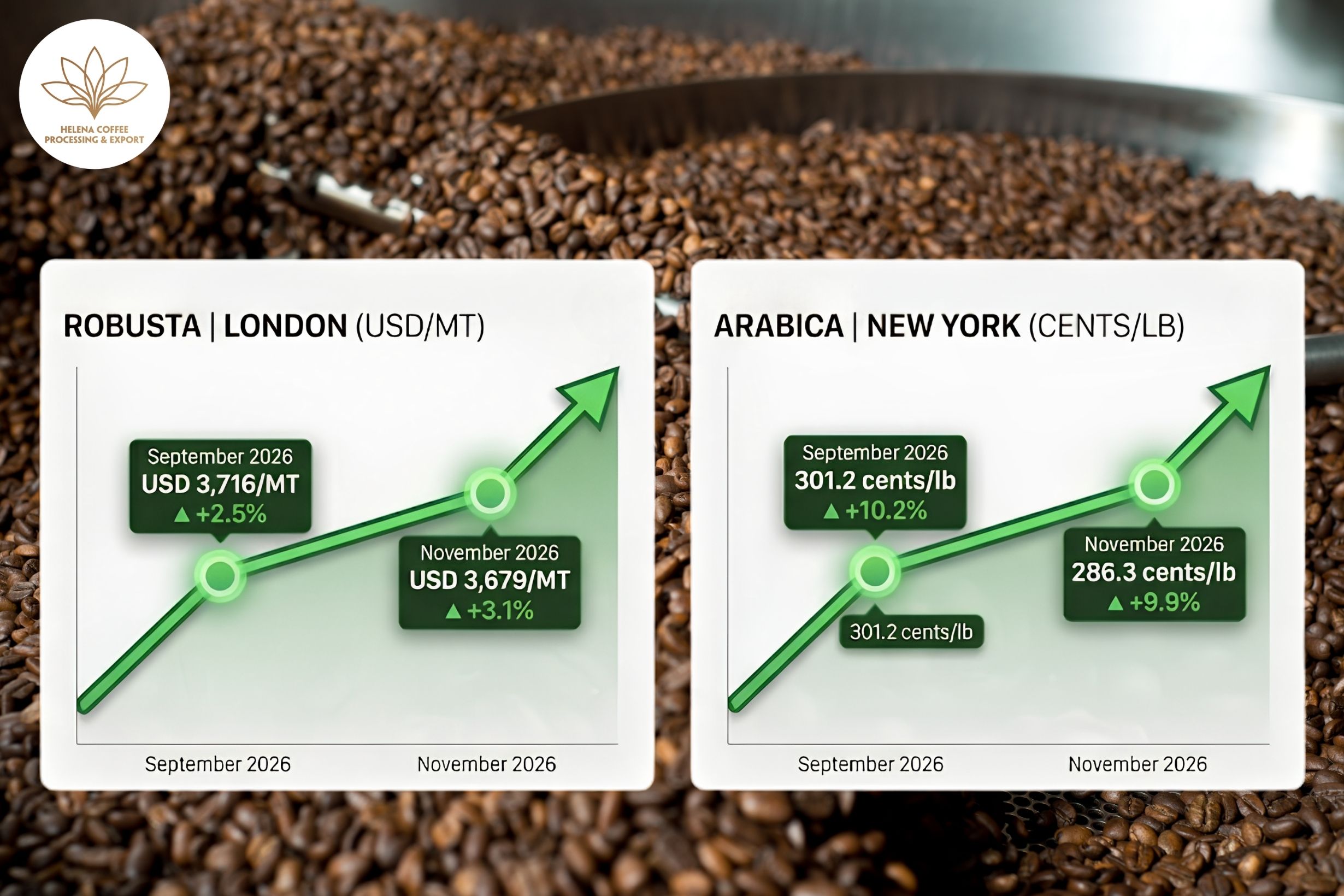
On the London ICE Exchange, September 2026 Robusta futures increased 2.5%, or US$89 per tonne, closing at US$3,716/MT. The November 2026 Robusta contract rose 3.1%, gaining US$109 per tonne to reach US$3,679/MT.
Meanwhile, on the New York ICE Exchange, Arabica prices recorded even stronger weekly performance.
- September 2026 Arabica futures climbed 10.2%, or 28 US cents/lb, reaching 301.2 US cents/lb.
- November 2026 contracts gained 9.9%, or 25.8 US cents/lb, settling at 286.3 US cents/lb.
The sharp increase reflects growing concerns over global coffee supply, particularly from Brazil.

Brazil’s Slow Harvest Continues to Support Coffee Prices
According to Reuters, weather conditions in Brazil remain the market’s primary focus. Unseasonal rainfall across several coffee-producing regions has slowed harvesting activities and raised concerns about the quality of the new crop.
According to agricultural consultancy Safras & Mercado, Brazilian farmers had harvested 52% of the 2026/27 coffee crop as of July 1.
This is below:
- 60% harvested during the same period last year.
- The five-year average of 55%.
Harvest progress improved by 8 percentage points compared to the previous week thanks to better weather conditions. However, analysts caution that faster harvesting does not immediately translate into greater market supply.
According to analyst Gil Barabach, harvested coffee still requires drying and processing before entering commercial channels, meaning additional supply will take time to reach the market.
Arabica and Robusta Harvest Progress Remains Behind Last Year
Harvest progress remains below historical levels for both of Brazil’s major coffee varieties.
For Arabica coffee:
- Harvest completion reached 42%.
- Down from 50% during the same period last year.
- Below the five-year average of 45%.
For Canephora (Conilon/Robusta):
- Harvest reached 72%.
- Lower than 77% recorded a year earlier.
- However, it remains in line with the historical average.
These figures reinforce expectations that short-term coffee supplies will remain relatively tight, providing continued support for coffee prices.
Brazilian Farmers Are Holding Back Coffee Sales
Besides weather disruptions, analysts believe another important factor behind rising coffee prices is the selling behavior of Brazilian farmers. According to Comunicaffe, two consecutive years of historically high coffee prices have significantly improved farmers’ financial positions. As a result, many producers no longer feel pressured to sell immediately after harvest.
Instead, they are choosing to:
- Store their coffee.
- Wait for higher prices.
- Maximize profits before releasing inventory.
This strategy reduces short-term market availability and further supports coffee prices.
El Niño Remains a Key Market Concern
In addition to Brazil’s harvest, traders continue to monitor the development of El Niño.
According to Hedgepoint Global Markets, El Niño’s impact on coffee production depends on several factors, including:
- Its intensity.
- Duration.
- Timing during the crop cycle.
- Regional climate conditions.
As a result, its effects can vary significantly between producing countries and crop years.
Brazil Faces Limited Risk in the Current Crop
Hedgepoint Global Markets expects Brazil’s 2026/27 coffee crop to experience little direct impact from El Niño. However, the outlook for the 2027/28 crop could become more uncertain if rainfall patterns change during the flowering period in early Southern Hemisphere spring. Since flowering is critical to determining future yields, unfavorable weather during this stage could significantly affect production.
Greater Risks for Central America and Asia
While Brazil is expected to face limited short-term impacts, coffee-producing regions in Central America and Asia appear to be more vulnerable. According to Hedgepoint Global Markets, El Niño could negatively affect coffee production in these regions during upcoming harvest seasons. Although these risks have not yet materialized, global coffee markets have already begun pricing in the possibility of tighter future supplies.
Will Coffee Prices Continue to Rise This Week?
Several factors continue to provide strong support for coffee prices, including:
- Brazil’s harvest remains behind both last year and the five-year average.
- Persistent rainfall continues to disrupt harvesting activities.
- Brazilian farmers are delaying coffee sales in anticipation of higher prices.
- Ongoing concerns over El Niño’s potential impact on global coffee production.
- Positive market sentiment across both Arabica and Robusta futures.
However, traders will continue to closely monitor Brazil’s harvest progress in the coming weeks. If weather conditions improve and more processed coffee begins reaching the market, upward price pressure could gradually ease.
Conclusion
Coffee prices began July on a strong note as supply concerns continued to support both Arabica and Robusta futures. Brazil’s slower harvest, farmer stockholding, and uncertainty surrounding future weather conditions have tightened short-term supply expectations. Unless these conditions improve significantly, coffee prices are likely to remain firm in the coming weeks, with market movements continuing to depend on Brazil’s harvest progress and global weather developments.

Helena Coffee – Your Reliable Coffee Supply Partner
As global coffee prices continue to fluctuate, choosing a reliable supplier is more important than ever. Helena Coffee provides premium Vietnamese Arabica and Robusta green coffee, specialty coffee, and OEM/private label solutions with consistent quality and dependable supply. Working directly with farmers and maintaining strict quality control throughout the supply chain, Helena Coffee helps roasters, importers, and coffee brands secure high-quality coffee while navigating changing market conditions. Whether you’re sourcing green beans or developing your own coffee brand, Helena Coffee is committed to supporting your long-term growth with reliable products and professional export services.
👉 Visit www.helenacoffee.vn or Info@helenacoffee.vn to explore our products and request a direct quote today!