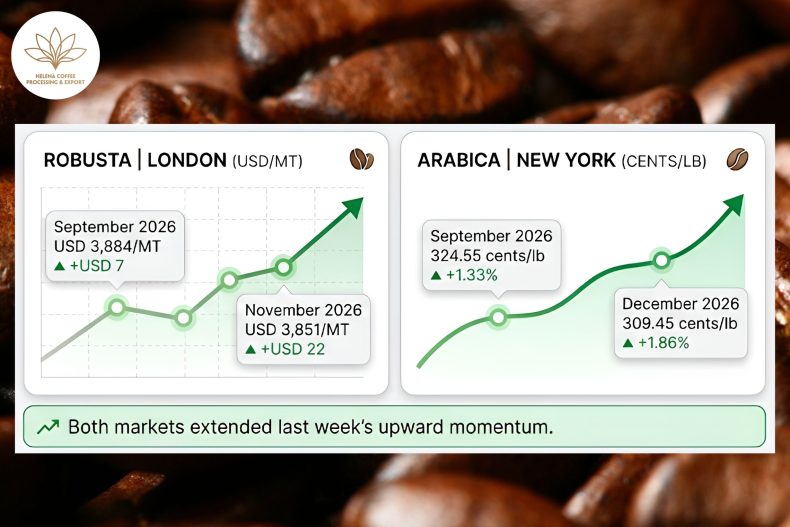
The global coffee price market is entering one of its most sensitive periods of 2026. While coffee prices have always been influenced by supply and demand, today’s market is increasingly driven by a combination of international trade policies, weather uncertainty, and investor sentiment.
Instead of reacting only to harvest volumes, coffee futures are now responding to expectations about future production, geopolitical developments, and climate forecasts. As a result, many analysts believe the third quarter could become one of the most volatile periods for coffee prices since the beginning of the year.
Three major factors are currently dominating market attention: new U.S. import tariffs, Brazil’s revised production forecast, and the growing probability of a strong El Niño event.
New U.S. Trade Policy Creates Market Uncertainty
One of the biggest developments affecting coffee prices is the latest announcement from the United States regarding import tariffs.
Last weekend, U.S. President Donald Trump unveiled plans to introduce a new import tariff ranging from 10% to 12.5% on products imported from approximately 60 countries, replacing the previous universal 10% tariff.
Although coffee is not currently the primary target of this policy, commodity traders are carefully evaluating its potential impact on international trade flows and import costs.
Markets dislike uncertainty. Whenever governments introduce new trade measures, investors often become more cautious. This frequently leads to reduced speculative buying and greater short-term price volatility.
For coffee exporters and importers, any increase in transportation costs, customs duties, or logistical complexity could influence purchasing decisions throughout the global supply chain.
As a result, even without direct tariffs on coffee, the market is already adjusting expectations.

Brazil Lowers Production Forecast
Brazil remains the world’s largest coffee producer, meaning every production update has immediate implications for coffee prices worldwide.
The revised outlook includes:
- Arabica: approximately 44.4 million bags, largely unchanged.
- Robusta (Conilon): approximately 21.6 million bags, representing an increase of around 3% compared to the previous crop.
At first glance, these figures appear relatively stable. However, professional traders are paying less attention to this year’s harvest and more attention to what may happen during the 2027/2028 crop cycle.
Coffee markets are forward-looking by nature. Futures prices often reflect expectations months or even years ahead rather than current supply conditions. Therefore, while the latest IBGE revision is important, it is not the primary concern driving today’s market.
El Niño Becomes the Market’s Biggest Variable
According to agricultural consultancy StoneX, the market’s focus is gradually shifting away from current supply and toward future weather risks. Climate forecasting models now indicate that the probability of El Niño continuing through the second half of the year exceeds 80%.
Even more importantly, forecasters suggest that El Niño could strengthen into a strong or very strong event by the end of the year. This is significant because coffee production depends heavily on weather during the flowering stage.
If Brazil experiences adequate rainfall and moderate temperatures during September and early October, Arabica flowering is expected to proceed normally.
However, if El Niño intensifies, several risks could emerge:
- Higher temperatures
- Reduced rainfall
- Increased drought stress
- Poor flowering conditions
- Lower bean development
These factors could significantly reduce yields for future harvests, particularly across Brazil’s major Arabica- and Robusta-producing regions.
Because flowering determines the next crop’s production potential, weather during this period often has a greater impact on futures prices than current harvest data.
Southeast Asia Is Also Under Close Watch
Brazil is not the only region attracting attention.
Weather agencies are increasingly monitoring conditions across Southeast Asia, particularly in:
- Vietnam
- Indonesia
These two countries are among the world’s largest Robusta coffee producers. Climate models indicate a growing possibility of drier-than-normal conditions in both countries. If prolonged dry weather develops, Robusta production could face additional pressure during upcoming harvest seasons.
Since Vietnam is the world’s largest exporter of Robusta coffee, even relatively small production changes can influence global supply and support higher coffee prices. For this reason, traders are closely following rainfall forecasts throughout the region.
Coffee Prices Are Now Driven by Expectations
One of the most important characteristics of commodity markets is that prices rarely wait for production changes to occur. Instead, prices move based on expectations.
Today’s coffee traders simultaneously monitor several critical indicators:
- International trade policies
- Weather forecasts
- Crop development
- Global inventories
- Export activity
- Investor positioning
- Consumer demand
When multiple uncertainties occur simultaneously, volatility tends to increase dramatically. This explains why coffee futures often rise or fall before any actual changes in harvest volume become visible. Market expectations have become almost as influential as physical supply itself.
Why Q3 Could Determine Coffee Price Direction
The third quarter has become one of the most important periods for the global coffee industry.
Several major developments are expected to occur within a short timeframe:
- U.S. trade policy implementation
- Continued Brazilian harvest progress
- Arabica flowering season
- El Niño development
- Weather conditions across Southeast Asia
Together, these variables could determine market sentiment heading into the final quarter of the year. If weather remains favorable, production expectations could improve and reduce upward pressure on coffee prices.
Conversely, if drought concerns intensify or trade disruptions expand, coffee prices could experience another strong rally despite relatively stable current production.
For buyers, exporters, and roasters, monitoring these indicators will be essential for managing procurement strategies during the remainder of 2026.

What Coffee Businesses Should Watch
Coffee businesses should avoid focusing solely on daily price movements.
Instead, long-term purchasing decisions should consider broader market fundamentals, including:
- Brazil’s flowering conditions
- El Niño forecasts
- Vietnam and Indonesia weather developments
- Global inventory levels
- Changes in international trade policy
- Currency fluctuations
- Investor positioning in coffee futures
Understanding these variables provides a much clearer picture of where coffee prices may head over the coming months.
Conclusion
Although coffee prices remain supported by relatively tight global supplies, the market is increasingly reacting to future expectations rather than current harvest data. Trade policy uncertainty, Brazil’s production outlook, and the growing risk of a strong El Niño are becoming the three dominant forces shaping coffee prices. As the third quarter progresses, these factors are likely to determine whether coffee prices continue climbing or enter another period of significant volatility.
Helena Coffee Vietnam – Your Reliable Coffee Supply Partner
At Helena Coffee Vietnam, we closely monitor global coffee market developments to help our partners make informed sourcing decisions. As a trusted exporter of Vietnamese Arabica, Robusta, specialty coffee, and OEM private label solutions, we provide consistent quality, transparent supply chains, and market insights that support long-term business growth. Whether you’re a coffee roaster, importer, distributor, or brand owner, Helena Coffee is committed to delivering premium Vietnamese coffee tailored to your market needs.
👉 Visit www.helenacoffee.vn or Info@helenacoffee.vn to explore our products and request a direct quote today!