Coffee Forecast: The global coffee market in the second quarter of 2026 is at a historic convergence point where climate variables, geopolitics, and monetary policies are completely redefining the price structure for both Arabica and Robusta. Following the extreme volatility of 2024 and 2025 when coffee prices repeatedly broke decade-long records 2026 has not brought an easy cool-down but rather a “new normal” characterized by a high price floor and deep volatility. Market analysis as of April 2026 shows a fierce tug-of-war between prospects of record supply from Brazil and actual supply disruptions in Southeast Asia, alongside unprecedented logistical barriers due to Middle Eastern conflicts.
Overview of Price Dynamics and Market Sentiment (Q2/2026)
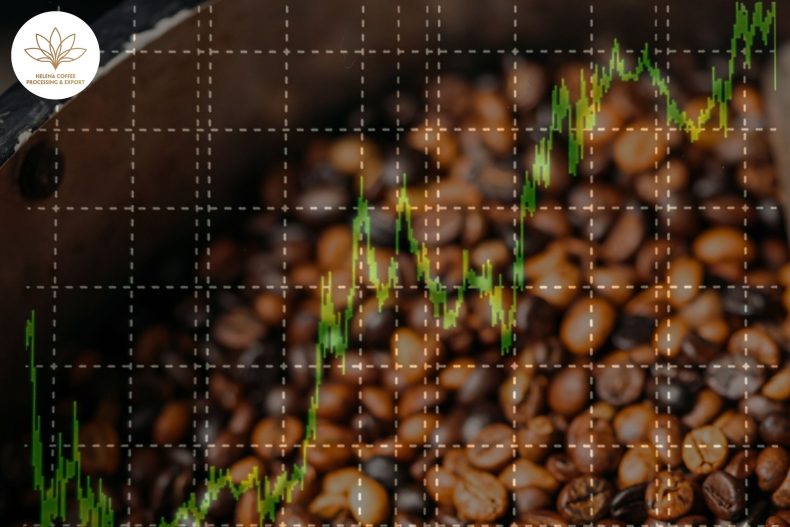
By late April 2026, international derivative exchanges recorded a strong recovery in coffee prices following a brief downturn earlier in the year. On April 23, 2026, coffee futures in London and New York surged simultaneously, reflecting fears of spot supply scarcity and rising logistics costs. Robusta coffee on the London exchange for May 2026 delivery closed at $3,539 per ton, a 2.37% single-session increase, while Arabica on the New York exchange jumped 4.64% to reach 302.4 US cents/lb.
This recovery occurred immediately after the market touched a 7-week low in mid-April, a period when optimism regarding the Brazilian crop temporarily outweighed other concerns. However, the reality of record-low inventories and the closure of the Strait of Hormuz in early March 2026 created a powerful reversal force. Data shows that Robusta inventories on the ICE exchange dropped to a 16-month low of just 3,755 lots by April 22, 2026, while Arabica inventories, despite a slight recovery, remained below historical averages at approximately 630,856 bags.
Table 1: Coffee Futures and Exchange Inventory Dynamics (April 2026)
| Market Indicator | Unit | Value (04/23/2026) | Monthly Change (%) | Inventory Status |
| Robusta ICE London (May ’26) | USD/ton | 3,539 | +1.96% (5 days) | 16-month low |
| Arabica ICE New York (May ’26) | US cents/lb | 302.4 | +4.64% (daily) | 630,856 bags (rising) |
| Dak Nong Domestic Price | VND/kg | 88,000 | +1,000 VND | Physical scarcity |
| I-CIP Composite Price Index | US cents/lb | 273.7 | +2.3% (March) | Stable high trend |
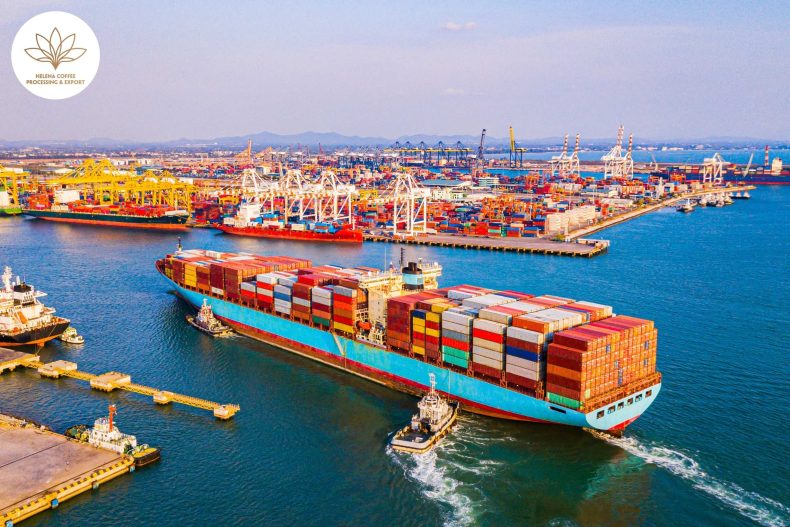
Deeper analysis of the market structure reveals a prevalent state of “backwardation” (spot prices higher than futures prices). This indicates an urgent need for physical goods among roasters. They are willing to pay a significant premium to secure raw materials for Q3 and Q4 2026 contracts amid the paralysis of shipping routes through the Red Sea and the Strait of Hormuz.
Brazil and the 2026/27 Crop: Expectations for Supply Salvation
Brazil continues to assert its role as the global coffee market’s “safety valve.” The 2026/27 crop is forecast to reach record volumes, bringing hope for a return to a global supply-demand surplus. Estimates from leading research organizations like Sucafina, StoneX, and Rabobank point to a strong recovery, particularly for Arabica, thanks to a positive biennial (on-year) cycle and favorable weather in late 2025.
Brazil’s overall production for the 2026/27 season is expected to reach an impressive 75.4 million bags, a 15.5% increase year-on-year. Arabica is the primary driver of this growth, with production estimated at 49.4 million bags, a 26% increase. This surge stems not only from biological cycles but also from heavy on-farm investment in crop management and inputs following the high profits of 2024-2025.
Table 2: Brazil Coffee Production Forecast for 2026/27 by Variety
| Variety | Production (Million bags) | Growth Rate (%) | Peak Harvest Window | Primary Risk |
| Arabica | 49.4 | 26.00% | April – October | Frost (June-July) |
| Robusta (Conilon) | 26 | -0.30% | March – July | High temp in Espírito Santo |
| Total | 75.4 | 15.50% | – | Export Logistics |
However, these record figures still carry uncertainties. Brazil’s government forecasting agency (Conab) offers a more conservative figure of 66.2 million bags, reflecting differences in assessing the recovery of trees weakened by previous droughts. Furthermore, despite increased output, production costs in Brazil have been pushed to a new level. The strengthening of the Brazilian Real (BRL) against the USD reaching a 2-year high in April 2026 is reducing the competitiveness of coffee exports and encouraging farmers to hold stock in anticipation of higher domestic prices.
The greatest risk for Brazil between May and July 2026 is frost. Key growing regions such as Southern Minas Gerais, Cerrado, and São Paulo are currently in their most sensitive weather window. While the probability of severe frost in 2026 is assessed as lower due to the proximity to the solar maximum, any abnormal cold front from Argentina could spark violent speculative waves on the New York exchange.
Vietnam: The Double Crisis of Floods and Drought
While Brazil looks toward abundance, Vietnam the world’s top Robusta producer is enduring an extremely difficult phase. Vietnam’s 2025/26 crop has been hammered by extreme weather events, beginning with historic flooding in November 2025 and continuing with severe drought and saltwater intrusion in early 2026.
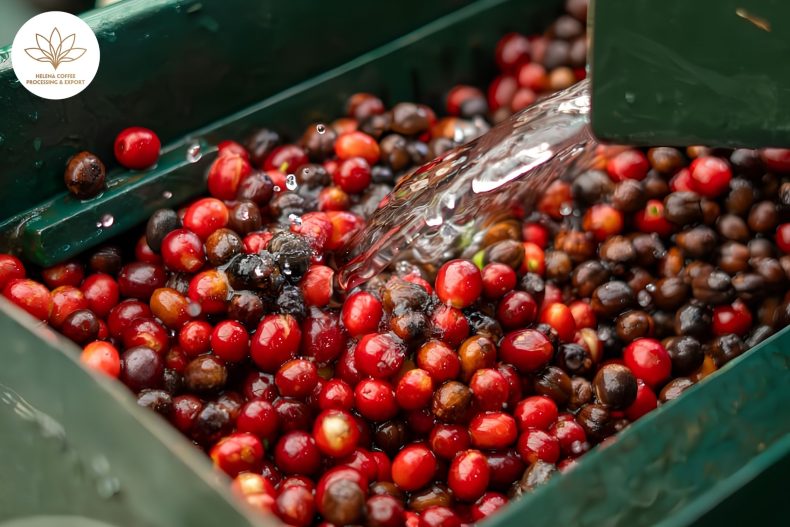
Field reports from Dak Lak which produces 40% of Vietnam’s Robusta indicate massive damage. Typhoons in late 2025 (such as Kalmaegi and Fengshen) flooded hundreds of thousands of hectares during the harvest. Approximately 15-20% of the 2025/26 crop is estimated to be lost or severely compromised by mold and black beans. This has upended initial recovery forecasts of 31 million bags; actual exportable production may fall below 25 million bags.
Table 3: Climate Change Impact in the Central Highlands (2025-2026 Crop)
| Phenomenon | Timing | Affected Areas | Direct Consequences | Projected Loss |
| Floods & Storms | Nov-25 | Dak Lak, Gia Lai | Cherry drop, root rot, mold | 15 – 20% of crop |
| Localized Drought | Mar-Apr 2026 | Non-irrigated zones | Flower drop, empty beans | 5 – 10% of next yield |
| Saline Intrusion | Feb-May 2026 | Lower river basins | Irrigation water shortage | Bean quality issues |
By April 2026, drought conditions are intensifying as El Niño is forecast to return in the latter half of the year with an 80-90% probability. Temperatures in the Central Highlands have risen earlier than multi-year averages, with rainfall since the start of the year down by 10-40%. The lack of irrigation during the fruit-filling stage will directly impact bean size and the yield of the upcoming 2026/27 crop.
The physical scarcity in Vietnam has pushed domestic prices to record highs, occasionally exceeding 120,000 VND/kg in late 2025 and stabilizing around 87,000 – 88,000 VND/kg in April 2026. Farmers and local agents in the Highlands are holding onto stocks tightly, releasing only small amounts for living expenses, further exacerbating the shortage on the London exchange.
Helena Coffee – Reliable Supply in a Volatile Global Market
In a global coffee market shaped by climate change, geopolitical tensions, and supply disruptions, Helena Coffee stands as a reliable partner you can trust. With a strong sourcing network in Vietnam’s Central Highlands, strict quality control, and consistent supply capabilities, Helena delivers export-grade Robusta and Arabica with full transparency and flexibility. Even as coffee prices fluctuate, Helena provides optimal solutions in quality, pricing, and reliability helping partners stay competitive and grow sustainably in an increasingly unpredictable market.
👉 Visit www.helenacoffee.vn or Info@helenacoffee.vn to explore our products and request a direct quote today!