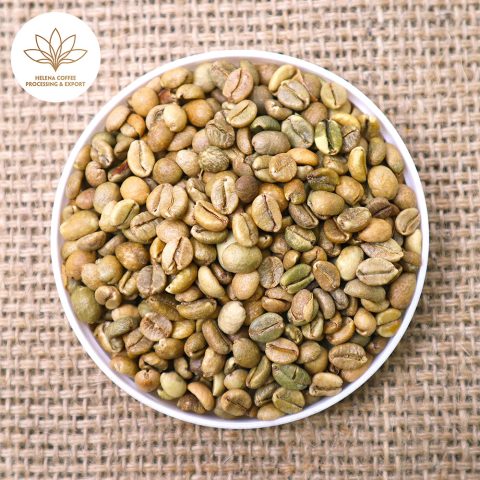


Blue Dragon Beans – Wet Polished Robusta S16 S18, Grade 1 from Daklak, Vietnam
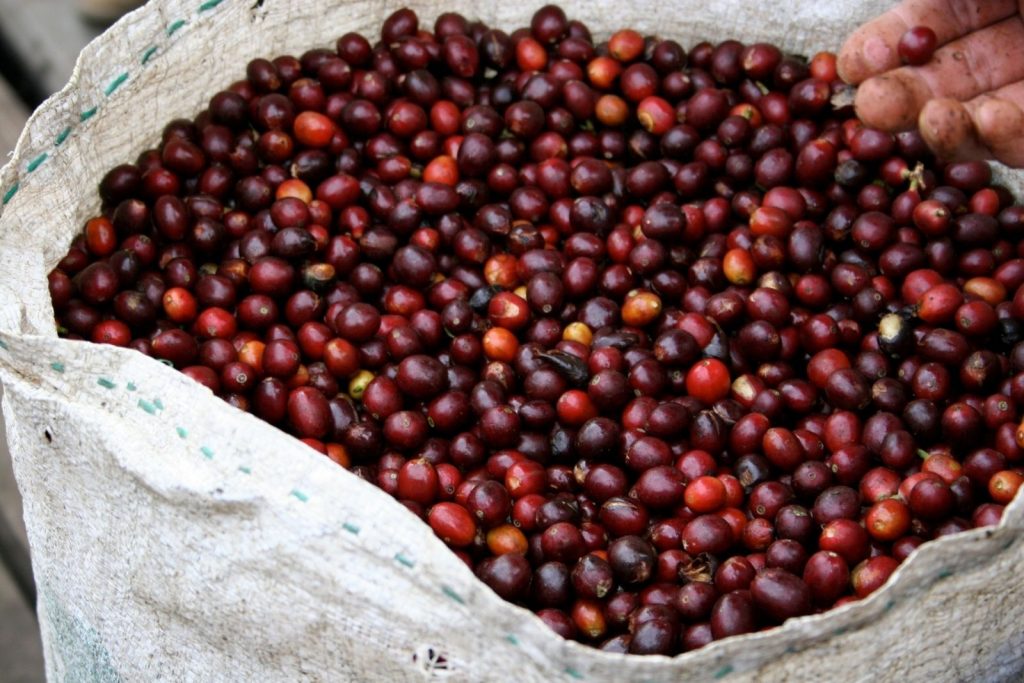
Blue Dragon beans is the trade name for Helena Coffee Vietnam’s wet polished robusta in a mixed S16 S18 screen: Grade 1 coffee with only 0.1% black beans, 0.1% broken beans and 0.5% foreign matter, at least 90% of beans above screens 18 and 16, and 12.5% maximum moisture. The water polishing step removes the silver skin and leaves the bluish-green, glossy surface that gives the lot its name.
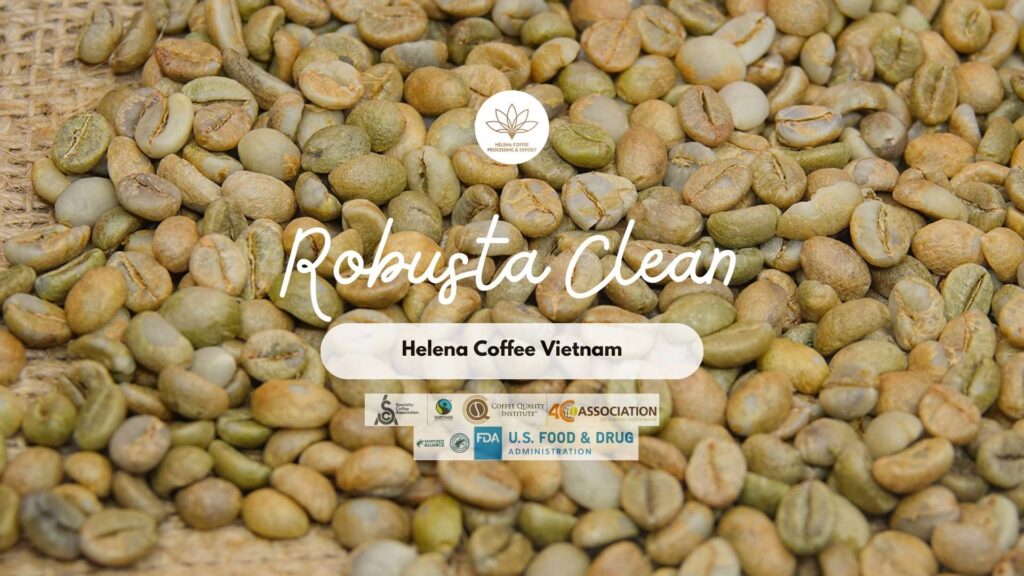
What sets Blue Dragon beans apart from standard robusta
Standard Vietnamese robusta is dried in the cherry, hulled and cleaned. Blue Dragon beans go through two extra steps: wet polishing, which strips the silver skin and surface dust, and a second pass over gravity tables and colour sorters to reach a 0.1% black and broken count. Roasters get less chaff, more even roast colour and a cleaner cup, while the mixed S16 S18 screen keeps the price below a pure SCR18 lot. The beans are processed in Daklak, Vietnam’s leading coffee province; Vietnam itself is the world’s largest robusta producer according to the International Coffee Organization.
Specifications
| Origin | Daklak, Vietnam |
|---|---|
| Variety | Robusta (Coffea canephora) |
| Grade | Grade 1 wet polished |
| Screen size | 90% min above screens 18 and 16 |
| Moisture | 12.5% max |
| Black beans | 0.1% max |
| Broken beans | 0.1% max |
| Foreign matter | 0.5% max |
| Processing | Natural, hulled, wet polished, gravity and colour sorted |
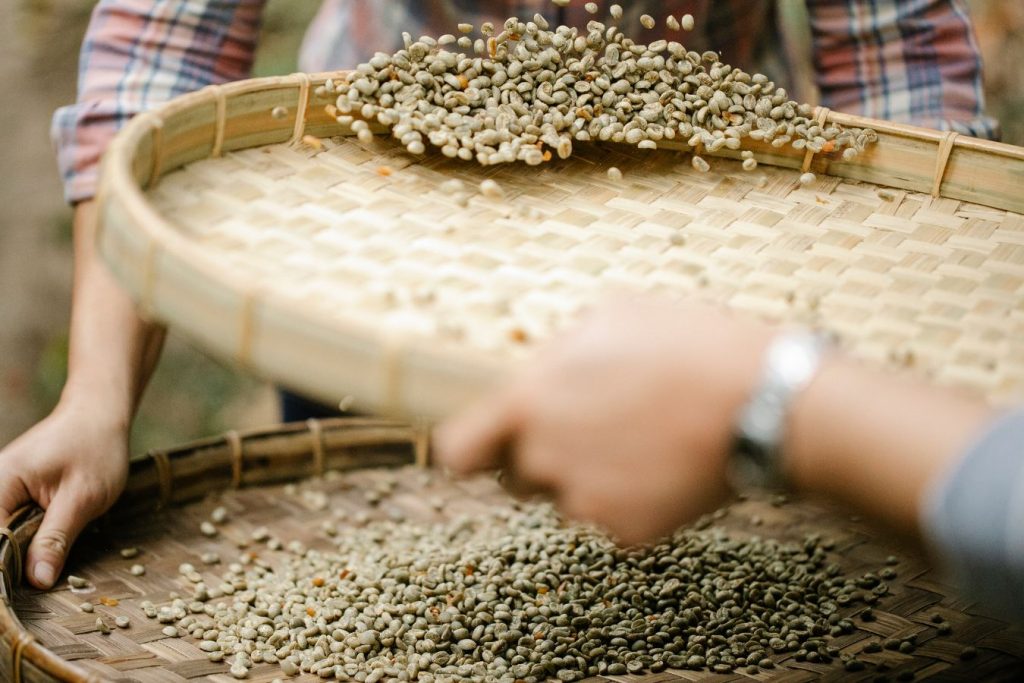
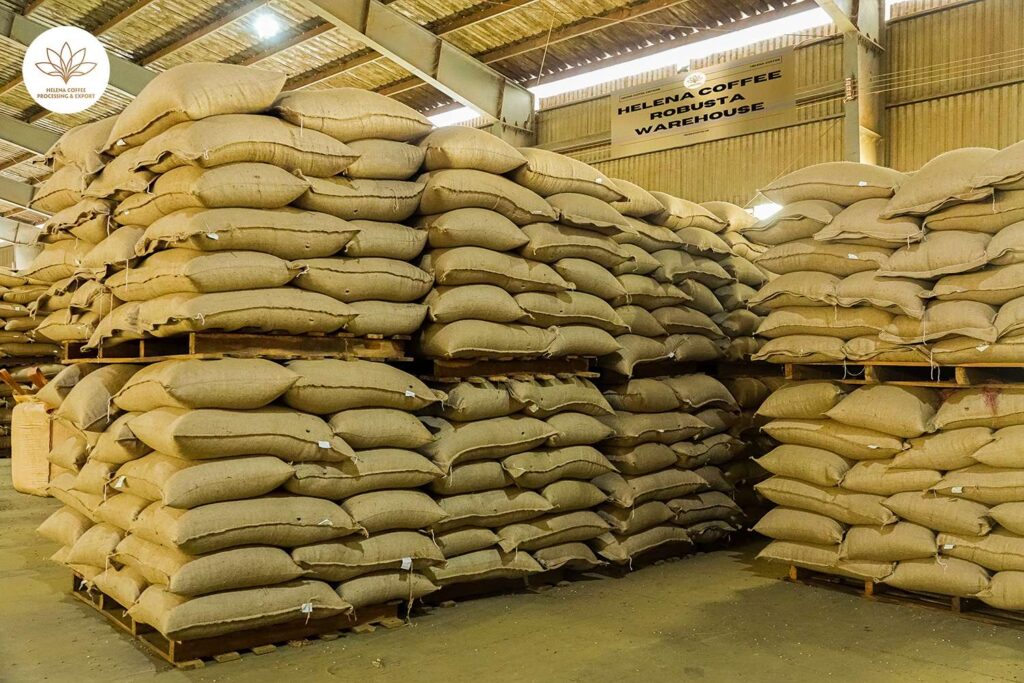
| Packaging | 60 kg jute bags, 320 bags per 20 ft container |
Cup profile and blending
Blue Dragon beans cup clean and smooth for a robusta: full body, cocoa and toasted-almond notes, mild bitterness and a long, sweet finish. Because the silver skin is gone, espresso blends built on these beans show a thick, stable crema without the ashy aftertaste of unpolished coffee. Roasters use them at 30–60% in espresso blends, at 100% for Vietnamese phin coffee and cold brew, and as a premium base for roast-and-ground retail packs.
Wholesale terms
- MOQ: 1 × 20 ft container (320 bags × 60 kg ≈ 19.2 MT); 40 ft about 27 MT.
- Packaging: 60 kg jute bags; GrainPro liners, 25 kg vacuum bags or jumbo bags on request.
- Pricing: FOB Ho Chi Minh City, CFR or CIF, fixed by signed PI.
- Payment: 30% T/T deposit and 70% balance by T/T, or irrevocable L/C at sight.
- Lead time: 2–3 weeks from PI confirmation.
- Documents: commercial invoice, packing list, bill of lading, Certificate of Origin, ICO certificate, phytosanitary and fumigation certificates; SGS, Cotecna or Cafecontrol inspection on request.
Frequently asked questions
Why are they called Blue Dragon beans?
Wet polishing removes the silver skin and leaves the beans with a glossy bluish-green colour. Dragon refers to the Vietnamese origin, so the trade name describes the look and the source of the coffee.
What is the difference between Blue Dragon beans and the SCR18 wet polished lot?
Both are wet polished Grade 1 robusta from Daklak. The SCR18 lot is screened to 90% above screen 18 only; Blue Dragon beans accept screen 16 as well, which lowers the price while keeping the same defect limits.
Can I get a sample before ordering a container?
Yes. We courier 300–500 g samples worldwide so your roaster and QC team can approve the lot before the PI.
Related products from Helena Coffee
You may also be interested in Vietnam Robusta wet polished SCR18, Wet polished robusta green coffee beans S18/S16, Robusta Clean S16 S18 Grade 1, or browse our full range of Vietnamese Robusta green coffee beans.
Interested in Blue Dragon beans for your blend? Send Helena Coffee your volume and destination port and we will reply with an FOB/CIF offer and a free sample within 24 hours. Email info@helenacoffee.vn, WhatsApp +84 789 818 828, or use our contact page.



Related products
Vietnam Robusta Wet Polished | Grade 1 | SCR18
Original price was: $5.50.$5.41Current price is: $5.41. Request a Quote / Ask for SampleAdd to cart