Producer’s Guide: How To Prune And Train Coffee Plants

Vietnamese Coffee Exporter

Taking care of a coffee plantation involves ongoing effort that extends beyond the harvest. Once you’ve collected the last cherry, it’s essential to consider how to prune and train coffee plants to ensure their health and maximize production. These management practices are crucial for keeping coffee trees in optimal condition.

In this article, we will explore the benefits of pruning and training coffee plants and when it’s the right time to apply these techniques. Learning how to prune and train coffee plants not only enhances the quality of the harvest but also promotes stronger, healthier growth. Keep reading to discover how you can implement these effective practices in your cultivation!

The Importance Of Pruning And Shaping Coffee Plants

Pruning and training coffee plants play a crucial role in enhancing the health and productivity of coffee trees. As coffee trees age, their cherry production naturally declines due to exhaustion and pest issues. However, implementing effective maintenance strategies can help sustain or even boost productivity over the years.

José Antonio San Roman, a coffee producer for Sabormex, emphasizes the need for a cultivation management plan. He states, “If you produce 10 quintals and don’t have a management plan in place, your yield could drop to just two quintals per hectare, even if the quality remains stable.”
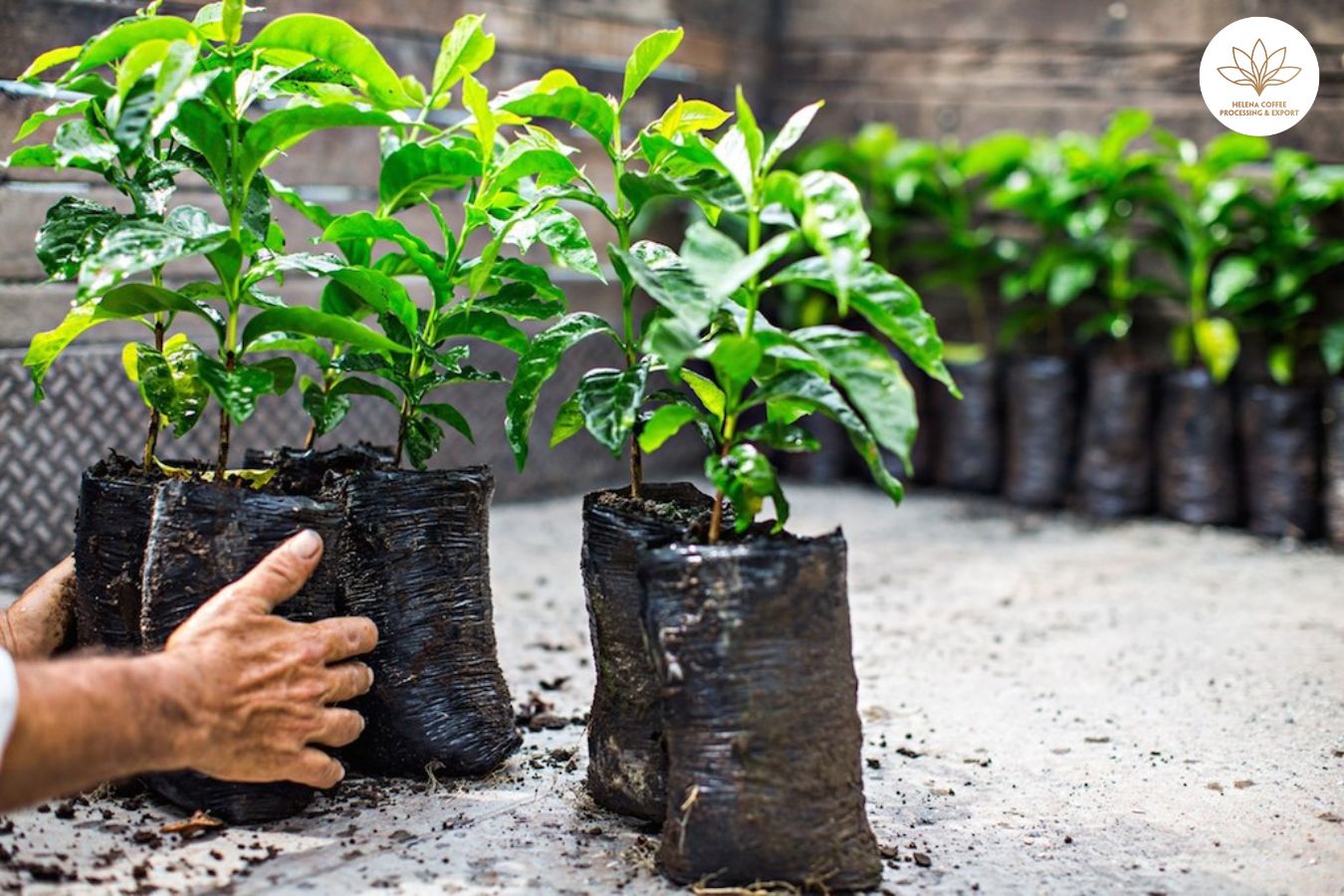
Helps coffee plants grow healthily during the rainy season

Additionally, pruning and training coffee plants can help prevent biennial yield fluctuations, where harvests alternate between heavy and light years, creating uncertainty in production and making it difficult to plan effectively. By learning to prune and train coffee plants properly, growers can ensure more consistent yields and better overall health for their crops.
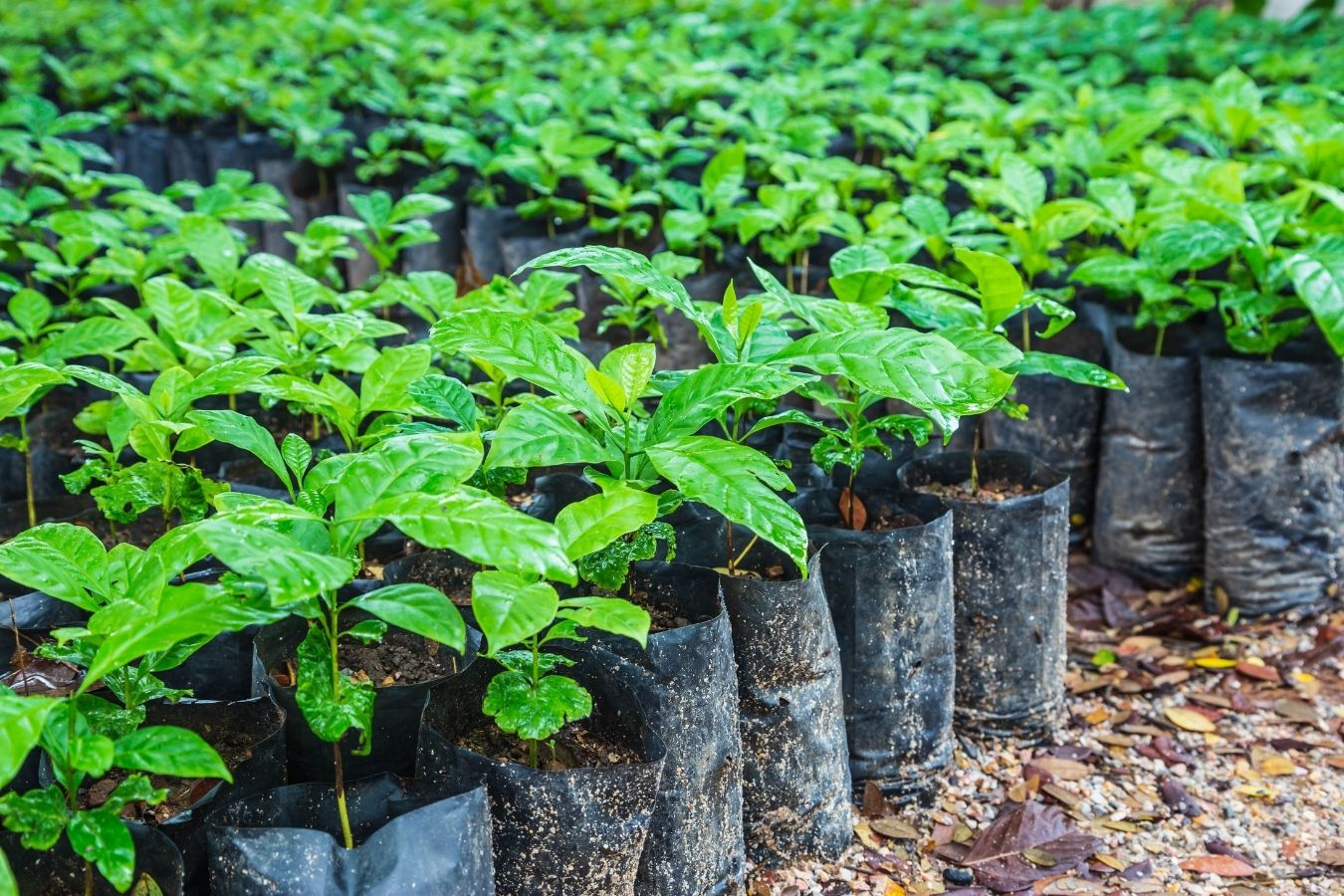
Many coffee varieties naturally grow to significant heights, making it challenging to reach the cherries and reducing harvesting efficiency. Matti Foncha, founder of Cameroon Boyo, notes that without proper shaping through pruning, “you have to bend the tree to harvest the cherries, which often leads to breakage.” He mentions that on his farm, he controls the height of coffee trees by trimming the tops.

coffee-cultivation-3-botanical-characteristics-of-coffee-plants

Allowing a coffee tree to become too bushy can prevent light and air from reaching all parts of the tree. This can lead to lower yields, as trees with excessive foliage may allocate energy to grow leaves and branches instead of producing flowers and cherries. Furthermore, pests and diseases thrive in darker, more humid areas within dense branches. By learning to prune and train coffee plants effectively, growers can enhance light penetration and airflow, ultimately improving both the health of the trees and the quality of the harvest.

Effective Methods For Pruning And Training Coffee Trees

There are various single-stem and multi-stem pruning and training systems, with different coffee-producing regions around the world employing diverse techniques.

Maintenance Pruning
Generally, pruning can be conducted manually each year to maintain the desired shape of coffee plants, encourage fruit production, facilitate air circulation, and ensure sunlight penetration, all while preventing nutrient deficiencies. This process involves removing any unproductive, damaged, or unhealthy leaves and branches, making clean and angled cuts. By learning how to prune and train coffee plants effectively, growers can significantly enhance the overall health and productivity of their crops. Regular maintenance through proper pruning and training techniques is essential for sustaining a successful coffee plantation.

The parameters for each pruning system can vary significantly. José Antonio explains that in Mexico, the “rock ‘n’ roll” or “skeleton” method involves maintaining a vertical height of 1.20 meters (3.9 feet) and a horizontal suspension at 20 cm (0.66 feet).

He also mentions that in traditional pruning practices, the small-scale producer walks through their lot and assesses each plant individually to determine the necessary management strategies. However, this method has proven to be unreliable and inconsistent, leading to poor results and a lack of stability in productivity. Additionally, it can be quite labor-intensive for producers to decide on the next steps. By learning to effectively prune and train coffee plants, growers can adopt more reliable methods that enhance overall productivity and sustainability in their coffee production.

Zoqueo is a more aggressive technique than pruning. It involves removing a significant portion of the trunk and its branches, although some may be left to encourage new growth. When zoqueando coffee plants, it’s important to be cautious and ensure that the plants receive enough nutrients to recover effectively.

Typically, zoqueo is performed when coffee trees are aging or infested, when their production or growth significantly declines, or to create more space. Matti mentions that sometimes, zoqueo is done simply to clear an area for planting other crops, allowing young coffee plants to grow back later.

José Antonio explains that a single-stem zoqueo method known as “lung pruning” is quite popular in Mexico. “It involves a vertical suspension at 90 cm (2.95 feet), keeping all horizontal growth below that height to avoid drastically reducing the harvest,” he says. By understanding how to prune and train coffee plants effectively, growers can implement zoqueo when necessary to maintain the health and productivity of their coffee trees.

Best Times To Prune And Train Coffee Trees

After the harvest, maintaining coffee plants through routine pruning is essential. When productivity levels cannot be restored through other means, rejuvenating the plants with zoqueo may become necessary.

José Antonio explains that when you “punish” the plant by renewing a significant portion of its foliage, it indeed leads to root loss, a decrease in photosynthetic capacity, and a reduction in the plant’s ability to absorb nutrients.

He recommends developing a systematic tissue management plan accompanied by a nutrition program that stimulates root generation to promote healthy growth. “When the plant is heavily defoliated and has many dead branches, especially in the upper part, small-scale producers typically apply zoqueo,” he notes. “However, if there are healthy live branches at the top and the plant shows a relatively good state of health, then they proceed with pruning.” By learning how to effectively prune and train coffee plants, growers can ensure better management and revitalization of their crops.

Discover Your Plantation And Your Coffee Plants

Before embarking on any pruning or zoqueo, it is important to consider the following factors:

Your Farm: Take into account the varieties you cultivate, the age of the plants, crop density, the layout of the farm, shade cultivation systems, and fertilization practices.

Your Region: Assess the incidence of pests and diseases, the necessary phytosanitary treatments, and the environmental conditions.

Your Goals: Define your quality and yield objectives, as well as the desired growth and management of the plants.

Additionally, consider your human and financial resources, and calculate your production costs. Intensive strategies often require a greater investment of time and money in crop management practices, fertilizers, labor, disinfection, monitoring, and equipment.

The next step is to develop a cultivation management plan. José Antonio advises being systematic in your approach, while acknowledging that adjustments may be necessary throughout the process. By understanding how to effectively prune and train coffee plants, you can enhance the sustainability and productivity of your coffee operation.

To design an effective cultivation management plan, you should become familiar with the characteristics of the coffee variety you grow, the structure of the plants, and how they develop.

Each coffee plant consists of a main trunk with vertical branches (or orthotropic), which produce horizontal stems (or plagiotropic), commonly referred to as primary, secondary, and tertiary branches. The nodes on the primary branches yield the highest quality cherries and cannot be replaced once removed. Over time, the fruits will grow farther from the trunk, as each node produces cherries only once.

To successfully stimulate cherry production and avoid fluctuations, the SCA recommends dividing the plantation into two sectors based on variety and age, then zoqueando each sector at different times.

José Antonio advises pruning one row at a time, as this “redistributes the harvest in a very reliable and predictable manner. It greatly simplifies the decision-making process.” By understanding how to effectively prune and train coffee plants, growers can enhance their yield consistency and overall management.

Pruning Methods For Pest And Disease Prevention

When you cut a coffee plant, you create wounds that increase the risk of infection. José Antonio explains that pruning and zoqueo should be done after the harvest and during cooler seasons to prevent the plant from producing shoots that won’t be harvested and to avoid stimulating growth that could fall victim to fungi and diseases.

He also emphasizes that “the best way to prune is to make a single clean cut, smooth and at an angle.”

“The cut should not create a hole in the wound,” he states. Otherwise, this would create a space where water could accumulate, raising the risk of infection. “The wound should be smooth so that water can run off,” he advises. By understanding how to properly prune and train coffee plants, growers can minimize the risk of infection and promote healthier, more resilient crops.

If you zoqueo a tree due to disease, make sure to collect all the good cherries and burn the removed branches to prevent the spread of infection. It’s essential to keep all tools—such as pruners, hoes, saws, knives, machetes, and scissors—well-sharpened to avoid tearing or uneven cuts, and to disinfect them regularly.

José Antonio also points out that you can use contact fungicides, stating that “they have a broad spectrum, a low cost, and can help you avoid these types of incidents.” By understanding how to properly prune and train coffee plants, you can not only maintain their health but also effectively manage disease risks within your plantation.

When you zoqueo a tree affected by disease, it’s important to gather all the healthy cherries and incinerate the branches you’ve removed to stop the infection from spreading. Keeping your tools—like pruners, hoes, saws, knives, machetes, and scissors—sharp is crucial to prevent tearing or uneven cuts, and regular disinfection is necessary.

José Antonio emphasizes that using contact fungicides can be beneficial, noting that “they offer a broad spectrum of protection, are cost-effective, and help mitigate these issues.” By learning how to effectively prune and train coffee plants, you can enhance their overall health and better control disease risks in your coffee farm.