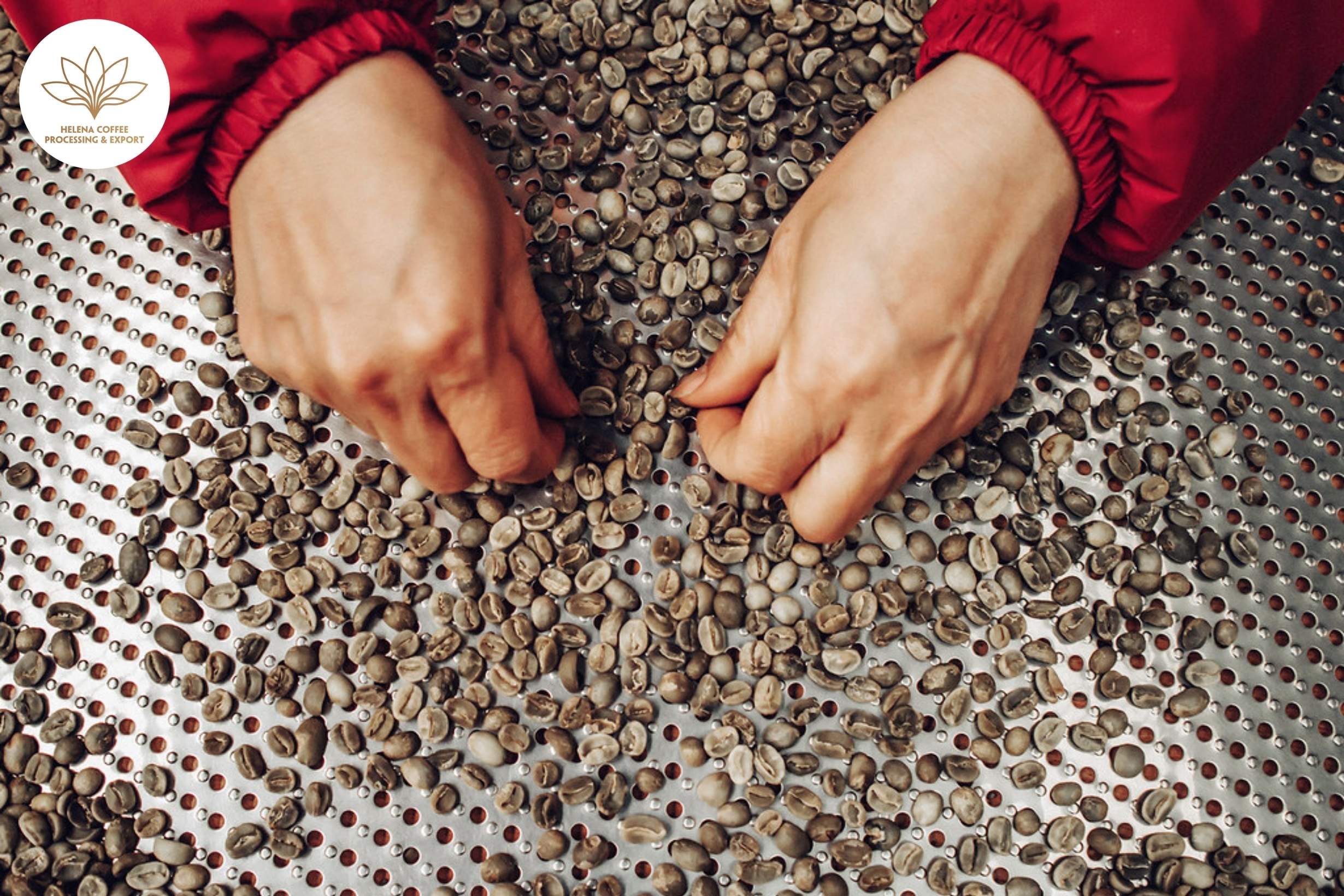
Every exceptional cup of coffee begins long before roasting. Green coffee defects are among the clearest indicators of quality, affecting flavor, roasting consistency, food safety, and the overall value of a coffee lot.
For producers, exporters, and roasters, defects are more than imperfect beans they reveal what happened during harvesting, processing, drying, or storage. A black bean may indicate overripeness, a sour bean suggests uncontrolled fermentation, while insect-damaged or faded beans point to farm management or storage issues.
Rather than isolated flaws, green coffee defects are valuable clues that help professionals understand and improve quality across the entire coffee supply chain.
What Are Green Coffee Defects?
A green coffee defect is any physical or sensory abnormality found in unroasted coffee beans that reduces quality, consistency, safety, or commercial value.
These defects may originate from several stages of coffee production, including:
- Harvesting
- Cherry selection
- Fermentation
- Drying
- Milling
- Storage
- Transportation
Unlike roasted coffee defects, which may result from roasting mistakes, green coffee defects are already present before roasting begins. While roasting can influence how defects appear in the cup, it cannot eliminate the underlying biological or physical damage. Every defect is essentially evidence of an event that occurred somewhere along the coffee supply chain.

Why Green Coffee Defects Matter
Many buyers associate defects only with grading standards. In reality, their impact extends much further.
Green coffee defects can affect:
- Cup quality
- Roasting performance
- Flavor consistency
- Shelf life
- Export value
- Food safety
- Brand reputation
Even a single defective bean can create undesirable flavors in an otherwise high-quality coffee.
For example:
- One potato defect bean may dominate an entire brew.
- Several sour beans can introduce fermented or vinegar-like flavors.
- Multiple immature beans increase bitterness and astringency.
- Mold-damaged beans may pose food safety concerns.
This is why specialty coffee places such strong emphasis on careful green coffee evaluation.
The Two Main Categories of Green Coffee Defects
Coffee professionals generally divide green coffee defects into two major categories.
Extrinsic Defects
Extrinsic defects are foreign materials that become mixed with coffee during harvesting or processing.
Common examples include:
- Stones
- Sticks
- Twigs
- Husk fragments
- Parchment pieces
- Coffee pod fragments
- Metal particles
- Foreign objects
Although these materials rarely influence flavor directly, they can damage processing equipment and indicate poor post-harvest handling.
A clean lot demonstrates effective harvesting, milling, and sorting practices.
Intrinsic Defects
Intrinsic defects occur within the coffee bean itself. These defects have the greatest impact on roasting behavior and cup quality.
Major intrinsic defects include:
- Full Black Beans
- Partial Black Beans
- Full Sour Beans
- Partial Sour Beans
- Immature Beans
- Floaters
- Insect-Damaged Beans
- Fungus-Damaged Beans
- Broken Beans
- Shell Beans
- Chipped Beans
- Crushed Beans
- Faded or Aged Beans
Each defect reflects a different biological or processing problem.
Full Black Beans
Among all primary defects, full black beans are one of the easiest to recognize.
Characteristics include:

- Dark black appearance
- Brittle texture
- Low density
- Dull surface
These beans commonly result from:
- Overripe cherries
- Fallen fruit
- Excessive microbial degradation
- Severe environmental stress
- Improper drying
In the cup, black beans often contribute:
- Earthy notes
- Burnt flavors
- Harsh bitterness
- Flat sweetness
Sour Beans
Sour beans are another major quality concern. Unlike black beans, they often develop because fermentation continues beyond its intended stage.
Possible causes include:
- Delayed processing
- Poor tank hygiene
- Thick fermentation layers
- Slow drying
- Excess moisture
Cup characteristics may include:
- Vinegar
- Rotten fruit
- Excessive fermentation
- Sharp acidity
- Alcohol-like flavors
These defects illustrate how microbial activity can dramatically alter coffee chemistry.
Immature Beans
Immature beans originate from cherries harvested before reaching full ripeness. Because the beans have not completed their development, they contain lower concentrations of sugars, amino acids, and flavor precursors.
As a result, roasted coffee often exhibits:
- Grassy flavors
- Green notes
- Astringency
- Thin body
- Poor sweetness
Selective harvesting remains one of the most effective methods for reducing immature beans.
Insect-Damaged Beans
Small holes in green coffee often indicate insect activity. However, the visible hole is only part of the problem.
Insect damage can:
- Increase oxidation
- Encourage microbial contamination
- Reduce bean density
- Create uneven roasting
Depending on severity, these beans may introduce woody or stale flavors into the final cup.
Fungus-Damaged Beans
Fungal contamination develops under excessive moisture and poor storage conditions.
Visible symptoms may include:
- Mold growth
- Surface discoloration
- Musty odor
- Damaged bean structure
Beyond sensory defects, fungal contamination raises important food safety concerns because some molds may produce Ochratoxin A (OTA) under favorable conditions. Although not every moldy bean contains toxins, preventing fungal growth remains essential throughout the supply chain.
Broken, Shell, and Floater Beans
Not all defects originate from biological causes. Mechanical processing may create:
Broken Beans
Broken beans oxidize faster due to their exposed internal surfaces.
Shell Beans
Shell beans have abnormal internal structures, producing inconsistent roasting.
Floaters
Floaters are low-density beans that roast differently from normal beans, often leading to uneven flavor development.
How Green Coffee Defects Affect Roasting
Roasting does not remove green coffee defects. Instead, it transforms them. Every defect enters the roaster with altered chemistry.
For example:
- Immature beans caramelize differently.
- Sour beans contain altered fermentation metabolites.
- Black beans possess degraded cellular structures.
- Floaters absorb heat much faster than dense beans.
Consequently, defective beans increase roast inconsistency and make it more difficult to achieve balanced flavor profiles. Professional roasters therefore rely heavily on green coffee evaluation before production begins.

Green Coffee Grading: More Than Counting Defects
Traditional grading systems classify defects based on their number and severity. While this provides a standardized language for international trade, experienced coffee professionals understand that grading extends beyond simple counting.
Modern evaluation also considers:
- Bean density
- Moisture content
- Water activity
- Uniformity
- Bean size
- Aroma
- Sample roasting
- Cupping performance
Physical inspection and sensory analysis work together to provide a complete picture of coffee quality.
Looking Beyond the Bean
Perhaps the most important lesson about green coffee defects is that every defect tells a story. A black bean may reveal harvesting mistakes. A sour bean reflects fermentation management. An aged bean points toward storage conditions. An insect-damaged bean highlights farm health.
Rather than viewing defects simply as flaws, coffee professionals increasingly use them to identify opportunities for improving quality throughout the supply chain.
Understanding these relationships allows producers to prevent defects before they occur instead of relying solely on sorting after the fact.
Conclusion
Green coffee defects are much more than physical imperfections. They are biological, chemical, and operational indicators that reveal how coffee has been harvested, processed, dried, stored, and transported. While grading systems provide a common language for trade, true quality assessment requires understanding the causes behind each defect and its impact on roasting and cup performance. By recognizing defects as valuable information rather than isolated flaws, producers, exporters, and roasters can improve consistency, reduce risk, and deliver higher-quality coffee from farm to cup.
Frequently Asked Questions (FAQs)
What are green coffee defects?
Green coffee defects are physical or sensory abnormalities found in unroasted coffee beans that negatively affect quality, roasting performance, or flavor.
What causes green coffee defects?
They can result from improper harvesting, uncontrolled fermentation, poor drying, insect damage, fungal contamination, inadequate storage, or mechanical processing errors.
Can roasting eliminate green coffee defects?
No. Roasting may mask or emphasize certain defects, but it cannot reverse the underlying physical or chemical changes in defective beans.
Partner with Helena Coffee for Premium Green Coffee
At Helena Coffee, quality begins long before roasting. Every lot of our Vietnamese Arabica and Robusta green coffee undergoes careful selection, grading, and quality control to minimize defects and ensure consistency. Working closely with trusted farmers and applying strict post-harvest standards, we supply exporters, roasters, and coffee brands worldwide with green coffee that meets the demands of today’s specialty and commercial markets. Whether you are sourcing single-origin beans or developing a private-label coffee line, Helena Coffee is your trusted partner for reliable quality and professional export solutions.
👉 Visit www.helenacoffee.vn or Info@helenacoffee.vn to explore our products and request a direct quote today!