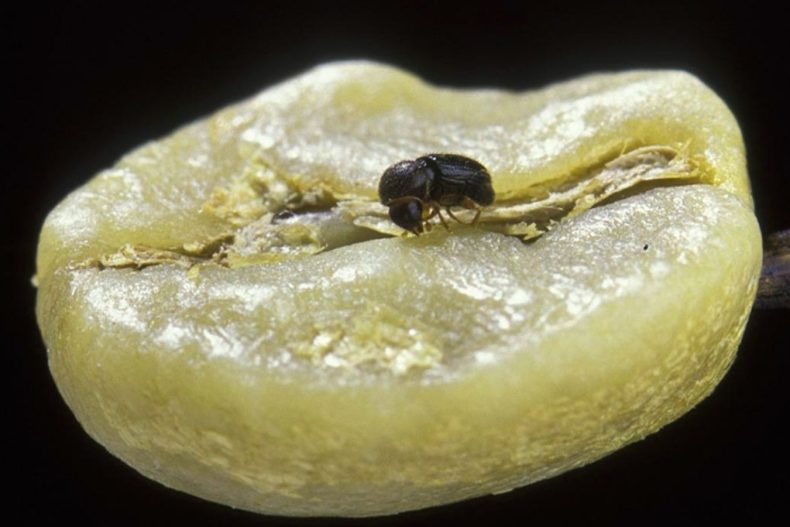
The Coffee Berry Borer (CBB), also known as the coffee borer beetle, is one of the most destructive pests affecting coffee plants worldwide. Scientifically known as Hypothenemus hampei, this tiny beetle originates from Africa and has spread to most major coffee-growing regions across the globe.
Biological Characteristics of the Coffee Berry Borer
CBB is a small black beetle measuring just 1.2 to 1.8 mm in length. Despite its size, it poses a significant threat by boring directly into coffee cherries to damage the beans. Female beetles can fly short distances, while males are flightless due to underdeveloped wings.
Life cycle duration: 24 to 45 days, depending on weather conditions
Female lifespan: 35 to 190 days
Eggs per female: 35 to 50 eggs per cycle
Gender ratio: On average, 13 females to 1 male
After boring a hole through the cherry’s outer skin, the female digs tunnels into the coffee bean to lay eggs. Once hatched, the larvae feed on the seed and pulp, significantly reducing coffee quality.

The Impact of the Coffee Berry Borer
Though small in size, CBB infestations can affect up to 100% of coffee cherries on a farm, resulting in yield losses of 30–35% per harvest season. Global economic damage is estimated at $500 million USD annually (according to Sucafina).
3 Major Effects on Coffee Yield and Quality:
Premature cherry drop – infected cherries fall to the ground before ripening, reducing the harvest.
Fungal and bacterial infections – entry holes provide access points for pathogens that spoil the beans.
Underdeveloped or hollow beans – resulting in low-density, poor-quality coffee.
Regions and Timing of Infestation
CBB typically attacks coffee cherries 8 to 32 weeks after flowering. The beetle thrives in humid, shaded areas, and tends to cluster in less sun-exposed parts of the plantation.
A single cherry can host 3 to 5 generations, with up to 100 beetles living inside just one fruit.

Pest Management and Control Strategies
1. Chemical Control
Pesticides are not an ideal solution due to:
High costs
Environmental risks
Documented pesticide resistance, such as to endosulfan (now banned in many countries)
2. Biological Control – A Sustainable Approach
a. Natural Predators
Bird species like the rufous-capped warbler and yellow warbler have been shown to reduce CBB populations by up to 50% on Costa Rican farms.
Parasitic wasps (Hymenoptera) native to Africa can also help reduce CBB presence while maintaining organic certification standards.
b. Entomopathogenic Fungi
Naturally occurring fungi that infect insects have shown promise in sustainably reducing CBB numbers without harming the environment.
3. Integrated Pest Management (IPM)
Close monitoring of beetle populations using traps
Timely harvesting to minimize exposure
Removing infested cherries to prevent spread
Applying biological repellents to reduce large-scale infestations

Conclusion
The Coffee Berry Borer (Hypothenemus hampei) remains a significant threat to over 20 million coffee-growing families worldwide. Despite its tiny size, its destructive impact on both yield and bean quality can severely affect farmers’ livelihoods.
By adopting integrated pest management (IPM) strategies, especially biological control, the coffee industry can move toward sustainable farming practices that protect both crops and the environment.
Helena Coffee – A Complete Solution for High-Quality, Sustainable Coffee
At Helena Coffee Vietnam, we understand the challenges coffee farmers face, especially when dealing with persistent threats like the Coffee Berry Borer. With a mission to elevate Vietnamese coffee on the global stage, Helena Coffee is committed to providing not just premium-quality coffee, but also comprehensive support for sustainable farming.
🔹 100% traceable coffee sources – ensuring transparency, quality, and safety
🔹 Technical support to help farmers effectively manage pests and improve productivity
🔹 A trusted partner throughout the supply chain – from farm to international market
Helena Coffee – Building a sustainable and distinctive coffee industry from the ground up.
📩 Contact us today for premium coffee solutions:
🌐 Website: www.helenacoffee.vn
📧 Email: info@helenacoffee.vn