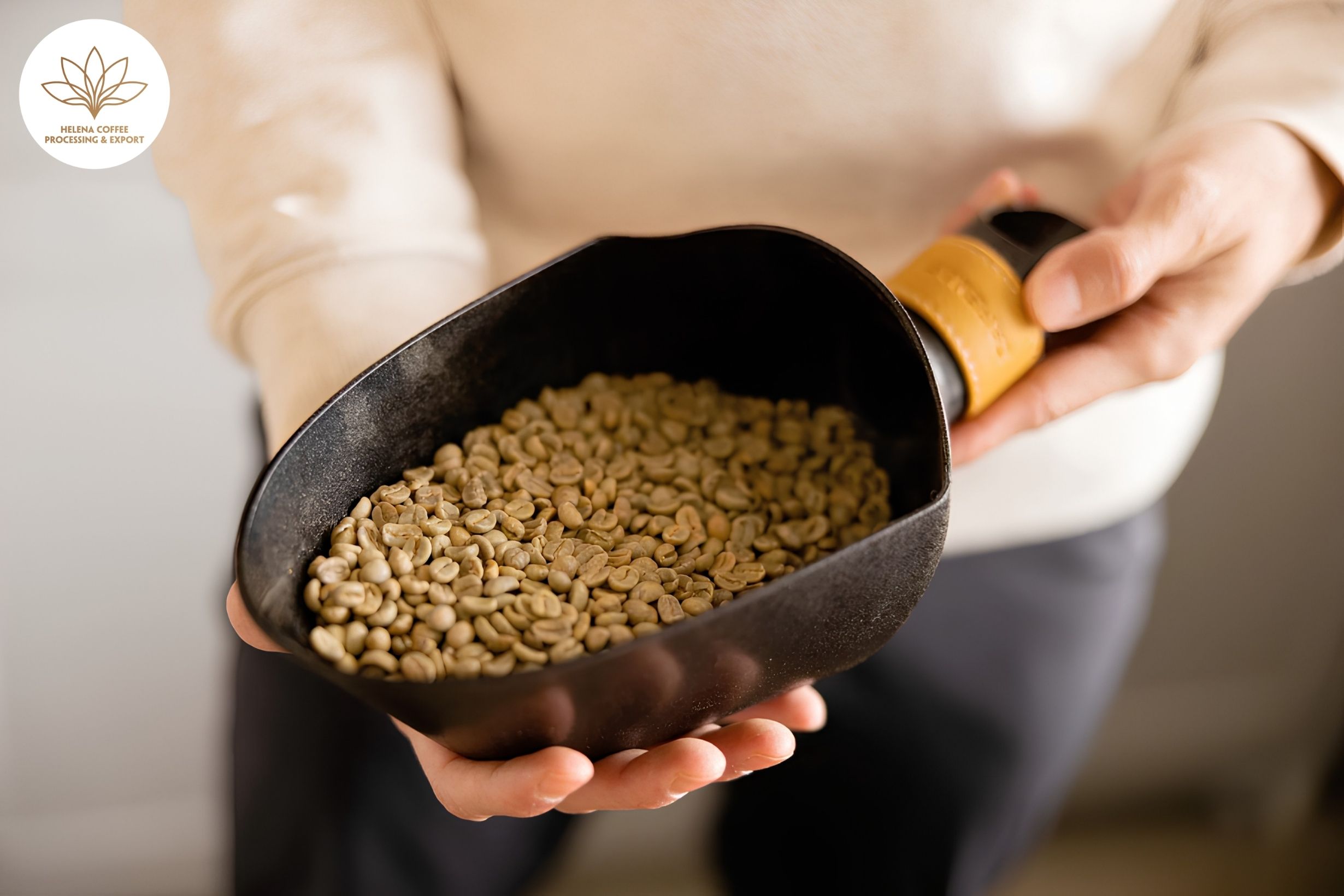
Coffee moisture content is one of the first quality indicators buyers evaluate when purchasing green coffee. Many assume that lower moisture always means better coffee, but that’s not entirely true. While excessive moisture increases the risk of mold and spoilage, coffee that is too dry can become brittle, roast unevenly, and lose flavor potential. The key isn’t the lowest moisture level, it’s finding the right balance for quality, storage, and roasting performance.
Why Coffee Moisture Content Matters
Green coffee remains a living biological seed after harvest. Even after processing, the bean continues to exchange moisture with its surrounding environment until it reaches equilibrium with ambient humidity.
Because of this, moisture content directly influences nearly every stage of the coffee supply chain, including:
- Storage stability
- Shipping performance
- Shelf life
- Roasting consistency
- Flavor development
- Green bean durability
Although this range may appear narrow, even a 1–2% difference can significantly affect how coffee behaves throughout storage and roasting.
When Coffee Moisture Is Too High
High coffee moisture content is one of the greatest threats to green coffee quality. Coffee stored above the recommended moisture range becomes vulnerable to several problems.
Increased Microbial Activity
Moisture creates ideal conditions for microorganisms.
When water availability becomes sufficiently high, yeasts and molds can continue growing after processing, leading to:
- Uncontrolled fermentation
- Musty flavors
- Mold contamination
- Increased food safety risks
Some fungi may also produce Ochratoxin A (OTA), a mycotoxin closely monitored in international coffee trade.
Reduced Storage Stability
Coffee naturally absorbs moisture from humid environments.
If green coffee begins storage with excessive moisture, it becomes much more susceptible to:
- Quality deterioration
- Color changes
- Off-flavors
- Shortened shelf life
This is especially important for coffee exported over long distances, where containers may experience dramatic temperature and humidity fluctuations.

Greater Shipping Risk
International shipments often spend 30–60 days at sea.
Coffee with elevated moisture levels faces higher risks of:
- Condensation
- Rewetting
- Mold development
- Quality loss before reaching the destination
For exporters, maintaining appropriate coffee moisture content is therefore a key factor in protecting product value.
Can Coffee Be Too Dry?
Surprisingly, yes. While excessive moisture is widely recognized as problematic, extremely low coffee moisture content can also reduce quality. This misconception is surprisingly common throughout the coffee industry. Lower moisture does not automatically mean better coffee.
Dry Coffee Becomes More Fragile
Coffee beans naturally contain water within their cellular structure. When moisture drops too low, those cells lose flexibility.
As a result, beans become:
- More brittle
- Easier to crack
- More likely to chip during handling
- More vulnerable during transportation
Mechanical damage not only affects appearance but also increases oxidation because cracked beans expose more surface area to oxygen.
Roasting Becomes Less Predictable
Moisture plays an essential role during roasting. Water helps transfer heat from the bean surface toward the center.
When coffee becomes excessively dry:
- Heat moves differently inside the bean
- Development may become uneven
- Roasting curves become harder to control
- Some beans roast too quickly while others underdevelop
For specialty roasters pursuing consistent flavor profiles, these differences become highly noticeable.
Flavor Development Can Be Limited
One of the most overlooked aspects of coffee moisture content is its relationship with flavor. Extremely dry beans often struggle to express their full sensory complexity.
Potential consequences include:
- Reduced sweetness
- Lower aroma intensity
- Less vibrant acidity
- Shorter finish
- Flatter overall cup profile
Although moisture itself does not create flavor, it strongly influences how roasting chemistry develops.
The goal is therefore not the driest coffee but the coffee with the most appropriate moisture level.
The Ideal Coffee Moisture Content
Most international coffee organizations recommend a moisture content between: 10.5%–12.5%
This range provides the best balance between:
- Safe storage
- Stable transportation
- Reduced microbial activity
- Consistent roasting
- Maximum flavor preservation
The Coffee Quality Institute (CQI) and the Specialty Coffee Association (SCA) both recognize this range as suitable for high-quality green coffee intended for specialty markets.
Rather than chasing the lowest number, experienced buyers look for stable and consistent moisture across every lot. Uniformity matters just as much as the average value.

Moisture Is Closely Connected to Water Activity
Although moisture content receives most attention, many coffee scientists argue that water activity (aw) is an even better predictor of storage stability.
Moisture measures how much water is inside the bean. Water activity measures how available that water is for microbial growth.
Today, many premium exporters monitor both moisture content and water activity before shipment. Together they provide a much more complete picture of coffee stability.
Why Professional Buyers Focus on Consistency
Experienced coffee importers rarely ask, “Which coffee has the lowest moisture?”
Instead, they ask:
- Is moisture evenly distributed?
- Has the coffee been properly dried?
- Will it remain stable throughout shipping?
- Will it roast consistently?
Coffee quality depends on controlling every stage of post-harvest processing not simply achieving the smallest moisture percentage. Consistency always outperforms extremes.
Choose Green Coffee You Can Trust with Helena Coffee Vietnam
At Helena Coffee Vietnam, every shipment of green coffee undergoes careful quality inspection before export, including moisture analysis to ensure each lot performs reliably during storage, international transportation, and roasting.
Whether supplying Robusta, Arabica, or specialty coffee, Helena focuses on maintaining the optimal moisture balance that preserves freshness while supporting consistent roasting and excellent cup quality.
By combining professional processing, strict quality control, and export expertise, Helena helps coffee roasters, importers, and distributors receive green coffee that is stable, dependable, and ready to unlock its full flavor potential.
Conclusion
Coffee moisture content is one of the most important indicators of green coffee quality, but it is often misunderstood. Higher moisture increases the risks of mold, unwanted fermentation, and storage instability. Yet excessively dry coffee can become brittle, roast unevenly, and fail to express its full flavor potential.
For this reason, successful coffee professionals don’t pursue the lowest moisture content. They pursue the right moisture content. In green coffee, quality is not created by extremes it is achieved through balance, precision, and careful control from farm to final cup.
👉 Visit www.helenacoffee.vn or Info@helenacoffee.vn to explore our products and request a direct quote today!