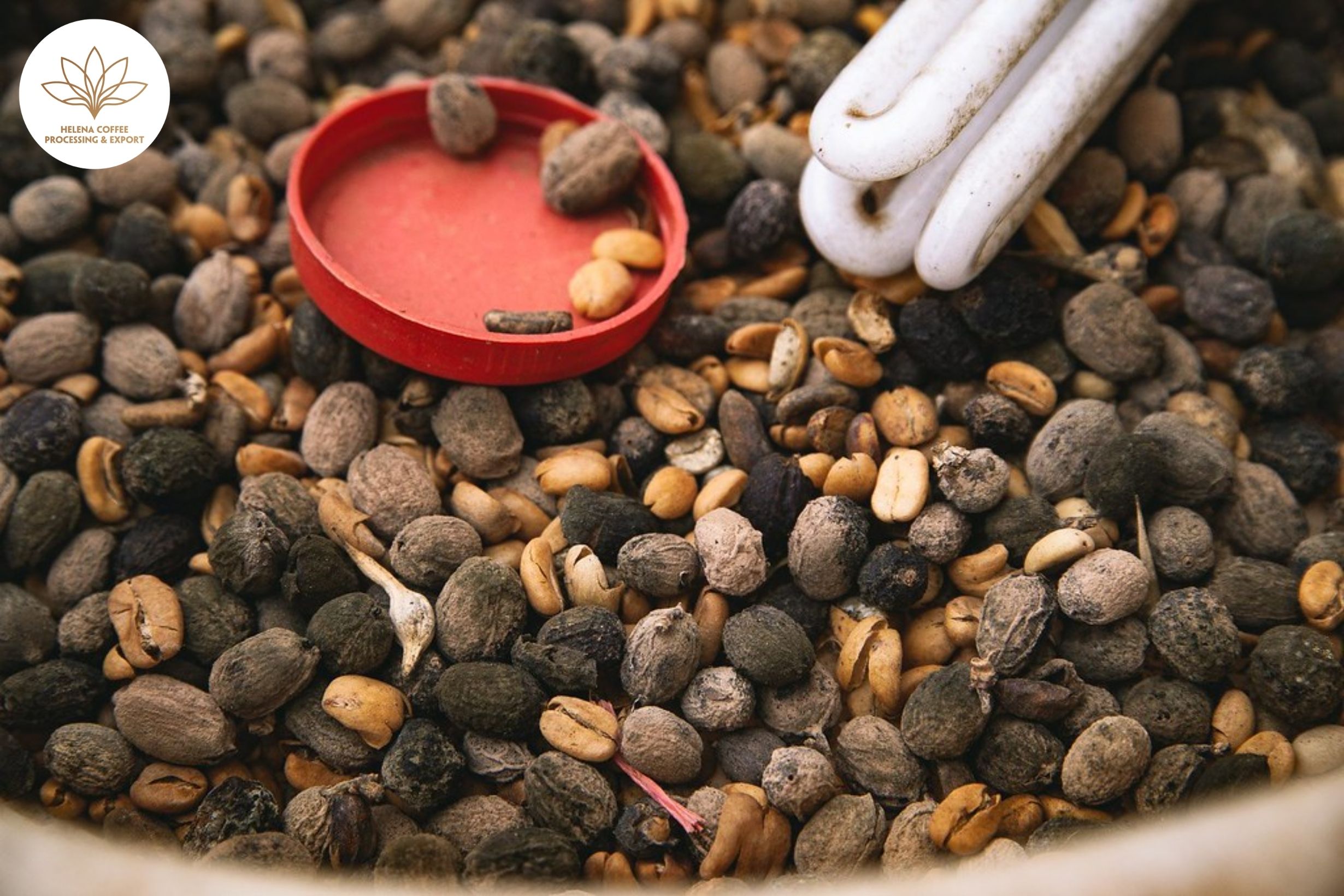
When buyers evaluate a lot of green coffee, they often focus on the visible defects: black beans, sour beans, insect damage, or broken beans. However, green coffee defects do not appear randomly. Every defective bean is the result of a specific event that occurred somewhere along the coffee supply chain.
Whether it begins with harvesting unripe cherries, uncontrolled fermentation, improper drying, or poor storage conditions, each stage of production can leave lasting marks on the coffee bean. By the time defects are discovered during grading, they are simply the visible evidence of much larger agronomic, biological, or logistical problems.
Understanding what causes green coffee defects allows producers to improve quality before defects occur, while helping importers and roasters make better purchasing decisions.
Green Coffee Defects Begin on the Farm
Coffee quality starts long before cherries reach the processing station. The earliest causes of green coffee defects often originate in the field, where climate, plant health, and harvesting practices determine the quality potential of every bean.
Coffee trees rarely produce cherries that ripen at exactly the same time. On a single branch, growers may find green, partially ripe, ripe, overripe, and dried cherries together. If all cherries are harvested simultaneously without proper selection, the resulting coffee lot will contain beans at different stages of development.
This uneven maturity becomes one of the primary sources of green coffee defects.

Harvesting Practices Play a Critical Role
Selective harvesting remains one of the most effective methods for preventing defects. Experienced pickers harvest only fully ripe cherries, allowing immature fruits to remain on the tree until they reach optimal maturity. Although this process requires more labor, it significantly improves coffee quality. In contrast, strip picking or mechanical harvesting often collects cherries regardless of ripeness.
As a result, producers may introduce:
- Immature beans
- Overripe cherries
- Dried cherries
- Fallen fruit
Each of these increases the likelihood of defects appearing later in processing. Poor harvesting practices also create additional work at washing stations, where producers must rely on flotation tanks, density separation, or manual sorting to remove unwanted cherries. The earlier defects are prevented, the lower the production costs become.
Uneven Ripeness Creates Multiple Defects
One of the most common causes of green coffee defects is uneven cherry maturity.
Immature cherries
Immature coffee beans contain lower concentrations of sugars, amino acids, and flavor precursors.
During roasting, they often produce:
- Grassy flavors
- Astringency
- Green notes
- Thin body
Overripe cherries
Overripe fruit is equally problematic. As cherries remain on the tree beyond peak maturity, their tissues begin to weaken, increasing microbial activity and making them more susceptible to fermentation.
This can contribute to:
- Black beans
- Sour beans
- Fermented flavors
Maintaining consistent cherry maturity is therefore one of the most important foundations of coffee quality. Processing can either preserve or damage coffee quality. Once cherries leave the farm, processing becomes the next critical stage.
Whether using washed, natural, honey, or pulped natural methods, the objective remains the same:
Protect bean quality while removing fruit safely and consistently.
Unfortunately, many green coffee defects originate during processing when conditions are poorly controlled.
Fermentation Is Not the Problem
Fermentation has become one of the coffee industry’s most discussed topics. Controlled fermentation can create remarkable complexity, sweetness, and fruit-forward flavors. However, uncontrolled fermentation often creates serious defects.
Common causes include:
- Excessively long fermentation
- Dirty fermentation tanks
- High temperatures
- Poor drainage
- Residual pulp contamination
- Inadequate monitoring
These conditions encourage undesirable microbial activity.
Instead of enhancing flavor, they may generate:
- Vinegar notes
- Alcohol aromas
- Rotten fruit
- Acetic acidity
- Butyric characteristics
- Stinker defects
The difference between exceptional fermentation and defective fermentation often comes down to careful process management.
Drying Mistakes Are a Major Source of Green Coffee Defects
Drying is one of the most delicate stages of coffee production. Freshly processed coffee still contains significant moisture that must be reduced gradually to safe storage levels. Several mistakes during drying can create defects.
Drying too slowly
Slow drying increases microbial growth and mold development.
Drying too quickly
Rapid drying may cause uneven moisture distribution inside the bean, reducing roasting consistency.
Thick drying layers
Coffee spread too deeply on patios or raised beds traps moisture and heat. This creates ideal conditions for unwanted fermentation.
Rain during drying
Unexpected rainfall can repeatedly rewet coffee.
Each wetting cycle increases the risk of:
- Mold
- Sour beans
- Fungal contamination
- Uneven moisture
Proper drying requires constant monitoring of weather, airflow, and bean moisture.
Moisture and Water Activity Matter More Than Appearance
Many coffee defects cannot be detected simply by looking at the bean. A visually attractive coffee may still carry excessive internal moisture.
Coffee professionals therefore evaluate:
- Moisture content
- Water activity
- Storage stability
These measurements help predict whether coffee will remain stable during transport and long-term storage. Even small increases in moisture can accelerate chemical degradation and microbial growth.

Poor Storage Slowly Creates Hidden Defects
Unlike harvesting or processing defects, storage defects develop gradually. Fresh green coffee continues to undergo slow chemical changes after processing.
Exposure to:
- Oxygen
- Heat
- Humidity
- Temperature fluctuations
can gradually reduce coffee quality.
Over time, stored coffee may develop:
- Woody flavors
- Cardboard notes
- Papery characteristics
- Flat acidity
- Reduced sweetness
These “old crop” characteristics often appear months after harvest. Because deterioration occurs slowly, producers may not notice problems until coffee reaches international buyers.
Packaging Plays an Important Role
Packaging is often overlooked as a cause of green coffee defects. Traditional jute bags provide excellent ventilation but also allow moisture exchange with the surrounding environment. In humid climates, coffee may reabsorb moisture during storage or transportation.
Modern moisture-barrier liners significantly reduce this risk by protecting coffee against:
- Water vapor
- Oxygen
- External odors
For premium specialty coffee, proper packaging has become an essential component of quality preservation.
Transportation Can Introduce New Risks
Even perfectly processed coffee can develop defects during export. Long shipping times expose coffee to changing environmental conditions.
Potential risks include:
- Container condensation
- High temperatures
- Excess humidity
- Poor warehouse ventilation
If containers are not properly managed, moisture accumulation may trigger mold growth or accelerate bean aging. Maintaining stable storage conditions throughout transportation is therefore just as important as farm-level quality control.
Food Safety Should Never Be Overlooked
Some green coffee defects involve more than flavor. Poor drying and humid storage create favorable conditions for certain molds capable of producing Ochratoxin A (OTA), a naturally occurring mycotoxin.
Although not every moldy bean contains OTA, producers should never rely on visual inspection alone.
Preventing fungal contamination requires:
- Rapid drying
- Safe moisture levels
- Proper ventilation
- Clean storage facilities
- Regular quality monitoring
Quality management and food safety are closely connected.
Preventing Green Coffee Defects Requires a Whole Supply Chain Approach
There is no single solution for preventing green coffee defects. Instead, quality depends on every participant in the coffee supply chain.
Successful producers typically focus on:
- Selective harvesting
- Immediate cherry sorting
- Clean processing facilities
- Controlled fermentation
- Uniform drying
- Moisture monitoring
- Proper storage
- Protective packaging
- Careful transportation
Each improvement reduces the likelihood of defects reaching the final buyer.
Prevention Costs Less Than Correction
Many producers invest significant resources in sorting defective beans after processing. However, prevention is almost always more efficient than correction.
Removing defects manually requires:
- Additional labor
- Optical sorting equipment
- Multiple grading stages
- Increased production costs
By preventing defects at their source, producers improve both quality and profitability. For importers and roasters, this means more consistent coffee and fewer surprises during roasting.
Conclusion
Green coffee defects are rarely isolated accidents, they are the visible outcome of decisions made throughout the coffee supply chain. From harvesting and cherry selection to fermentation, drying, storage, packaging, and transportation, every stage influences the final quality of green coffee. Understanding these causes enables producers to prevent defects before they occur, while helping buyers source more reliable and consistent coffee. In today’s specialty coffee industry, preventing defects is no longer just about meeting grading standards, it is about protecting flavor, food safety, and long-term value.
Frequently Asked Questions (FAQs)
What is the main cause of green coffee defects?
Most green coffee defects result from improper harvesting, uncontrolled fermentation, poor drying, inadequate storage, or mechanical damage during processing.
Can improper drying create coffee defects?
Yes. Drying too slowly, drying unevenly, or exposing coffee to rain can lead to mold growth, sour beans, fungal contamination, and inconsistent moisture levels.
Why is selective harvesting important?
Selective harvesting ensures only ripe cherries are picked, reducing the number of immature, overripe, and defective beans in the final coffee lot.
Helena Coffee – Quality Starts Before the Roast
At Helena Coffee, we believe exceptional coffee begins with exceptional post-harvest practices. From selective cherry picking and controlled processing to strict grading and moisture management, every stage of our supply chain is designed to minimize green coffee defects and preserve the natural quality of Vietnamese Arabica and Robusta. By combining experienced producers with rigorous quality control, Helena Coffee delivers reliable green coffee solutions for roasters, importers, and coffee brands seeking consistency in every shipment.
👉 Visit www.helenacoffee.vn or Info@helenacoffee.vn to explore our products and request a direct quote today!