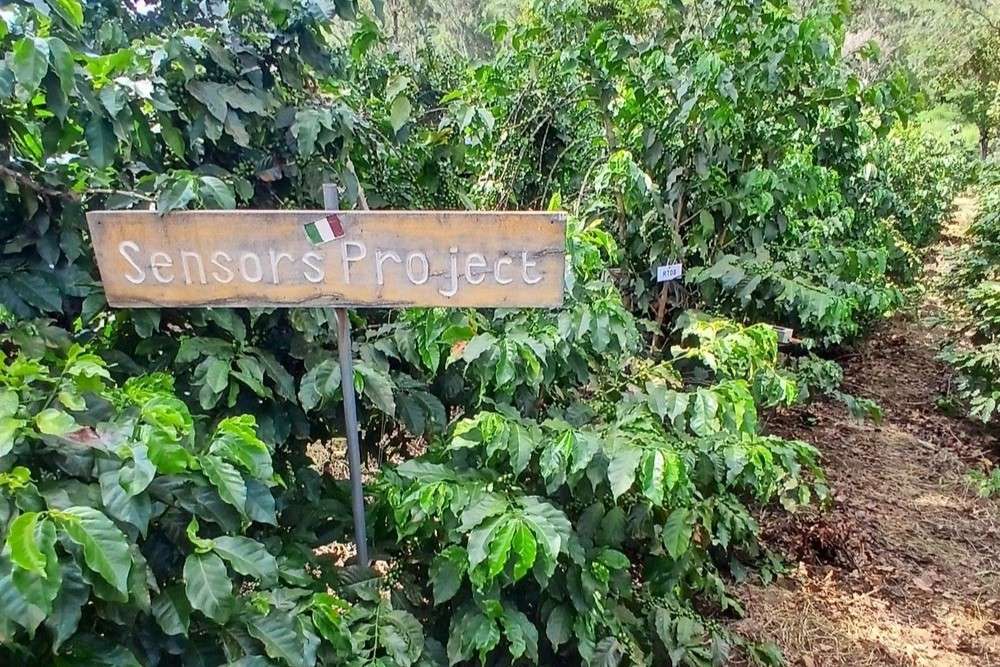
The ConSenso Project in Tanzania is taking the lead in addressing the challenges brought on by climate change, leveraging advanced technology to develop climate-resilient coffee farming practices. As climate change continues to reshape global agriculture, coffee growers are facing mounting difficulties: erratic rainfall, rising temperatures, and prolonged droughts—all of which threaten the delicate balance required for successful coffee cultivation.
Let’s explore how the ConSenso Project is setting new standards for sustainability and transforming coffee production worldwide.
What Is the ConSenso Project?
The ConSenso Project is a groundbreaking initiative based at Utengule Coffee Farm in Tanzania. Led by Massimo Battaglia and his team at the Accademia del Caffè Espresso, this project combines advanced technology and data-driven insights to support coffee farmers in navigating climate-related challenges.
Using 52 solar-powered sensors, a weather station, and plant growth monitors, the ConSenso Project collects real-time data on critical indicators like soil moisture, electrical activity, and environmental conditions. This approach represents a fundamental shift from relying solely on traditional knowledge to harnessing data and technology for more sustainable, informed decision-making.

Why Climate Resilience Matters for Coffee
Coffee is one of the most climate-sensitive crops in the world. With erratic weather patterns becoming more common, the need for climate-resilient coffee farming has never been more urgent. The ConSenso Project addresses this head-on by providing farmers with accurate, real-time data to help them adapt to these changing conditions.
Massimo explains:
“We see the sensors as heartbeat monitors for the coffee plants. They give us a way to listen to the plants and respond to their needs in a way that’s proactive and precise.”
Key Findings: Listening to the Plants
One of the most significant early findings from the ConSenso Project is the critical role of soil moisture in supporting healthy coffee plant growth. The project’s data has revealed that higher levels of surface moisture significantly boost plant development, while elevated temperatures during dry spells can hinder it.
“This insight is crucial for developing new strategies to manage water resources more effectively,” Massimo says. By understanding the precise relationship between water availability and plant health, the ConSenso Project is helping coffee farmers anticipate and mitigate stress before it impacts yields.
Coffee Farms as Carbon Sinks
Beyond improving plant health, the ConSenso Project is also exploring coffee farming’s role in fighting climate change. Farms like Utengule, especially those with integrated shade trees, have the potential to act as carbon sinks, capturing CO2 and reducing the overall carbon footprint of coffee production.
“Our data confirms that coffee plantations with shade trees function like productive forests,” Massimo notes. “They store carbon, which could open the door for coffee producers to participate in carbon credit markets and strengthen their long-term sustainability.”

Challenges of High-Tech Farming
Implementing advanced technologies in an active coffee farm is not without its hurdles. Massimo admits:
“One of the biggest challenges is balancing high-tech research with the realities of daily farm work. Farmers need solutions that are not just scientifically sound but also practical and easy to adopt.”
Fortunately, the ConSenso Project has found strong support from local farmers at Utengule. They’re eager to see how this data-driven approach can improve productivity and resilience, providing a model that could be replicated on other farms.
Scaling the ConSenso Project to Smallholders
While the ConSenso Project is already yielding valuable insights in Tanzania, its potential applications extend far beyond a single farm. Massimo believes that the technology can be adapted to various growing conditions worldwide, from different altitudes to varying soil types.
However, he also acknowledges a key challenge:
“Smallholder farmers, who produce the majority of the world’s coffee, cannot afford to adopt this technology alone. They need support from cooperatives, governments, and international partners.”
This highlights the importance of global collaboration to ensure that the benefits of the ConSenso Project are accessible to everyone in the coffee value chain.
Water Scarcity in Mbeya: A Defining Issue
Water scarcity is a growing concern in the Mbeya region of Tanzania, where Utengule Coffee Farm is located. Massimo stresses:
“Water is the defining issue here. The ConSenso Project provides farmers with precise indicators to monitor water stress and optimize irrigation, ensuring that every drop counts.”
Interestingly, the project has also shown the vital role of shade trees in conserving water. By creating microclimates that reduce evaporation, shade trees make plantations more resilient and sustainable in the face of climate change.
A Tech-Driven Future for Coffee Farming
The ConSenso Project isn’t just about today’s challenges—it’s paving the way for the future of coffee farming. With IoT sensors, AI-powered analytics, and real-time data, the project is helping to shift coffee farming from reactive to proactive.
“The next frontier is to anticipate plant needs and adapt before problems arise,” Massimo predicts. This forward-thinking approach could reshape global coffee farming standards and set a new benchmark for sustainability and quality.
The Human Element: Making Technology Work for Farmers
Massimo emphasizes that while the ConSenso Project is driven by technology, it’s ultimately about supporting people:
“We must remember that technology is a tool. It’s there to help farmers thrive and to ensure that coffee farming can remain a sustainable and rewarding way of life, even in the face of climate change.”

Conclusion: A Blueprint for Climate-Resilient Coffee Farming
The ConSenso Project offers a glimpse into a future where data-driven, climate-resilient practices empower coffee farmers to thrive in a changing world. By listening to the environment, leveraging cutting-edge tools, and prioritizing the needs of farmers, this innovative project is setting new standards for sustainability in coffee production.
As Massimo concludes:
“The key takeaway from the ConSenso Project is that the future of coffee farming lies in listening—to the environment, to data, and most importantly, to the plants themselves.”
Helena Coffee: Bringing Sustainable Vietnamese Coffee to the World
Helena Coffee Vietnam shares the same vision as the ConSenso Project — promoting sustainable, climate-resilient coffee farming. As a trusted supplier of high-quality Arabica and Robusta from Vietnam, we blend tradition with innovation to ensure every cup delivers both great taste and meaningful impact.
From sourcing directly from local farmers to investing in advanced processing, Helena Coffee is committed to quality and building a fairer, more sustainable coffee industry.
👉 Join us in shaping a greener, smarter future for coffee.
📩 Contact us: Info@helenacoffee.vn or www.helenacoffee.vn